https://www.youtube.com/watch?v=NqtYAihmqcA
"[[ In this episode of Bitcast, titled Dragon Age, Anthem, and BioWare with Mark Darrah, Mark Darrah was a guest. He discussed his “time with BioWare, role in Dragon Age and how the new entry was coming along, what happened with Anthem, the presence of EA, and more.” Here are some quotes of interest transcribed for accessibility reasons, as the vid is almost 3 hours long, and so forth.
“When BioWare got bought by EA, they were publishing north of twenty to thirty games a year. Now it’s - seven? - I don’t wanna actually put a number on there but yeah, it’s the sports titles, Sims, probably a shooter, and then once in a while a BioWare or Respawn game comes out.”
Q. from the hosts: “Do you reflect fondly on the days when you and your peers could just, from a AAA perspective, sit down and create a game like Dragon Age: Origins, and do you see that that’s kind of faded in a way? Is that a lot less feasible in today’s market?”
A. “It may be a lot less feasible. But honestly I think, what happened with Dragon Age is that Dragon Age always had the misfortune of never being understood by EA and always being sort of pushed to chase a broadening. So you see this in - so, Dragon Age: Origins, just an RPG. By Dragon Age: Inquisition, you’re definitely into action-RPG space. And if you actually look across the RPG space as a whole, I think that’s actually kind of happened everywhere, where there’s been a push towards broader, more accessible features and language. I mean, there was a time when we wouldn’t even say the word ‘RPG’ out loud because it was seen as being too niche. Now, I think, that’s definitely past, people say 'RPG’ now, but I mean honestly, in a lot of ways, the path from Baldur’s Gate 1 to Dragon Age: Inquisition, I think it’s pretty evolutionary. It’s a series of steps towards more action, more accessible features and bits. I think the question is, you can’t sit down and make Baldur’s Gate today as a AAA game, and it was a AAA game, if such a term even existed back then in the nineties, because it doesn’t have the market, and back then it didn’t have the market for the budget you’d spend these days - the industry was just so much smaller. I question whether or not you could sit down and make a Dragon Age: Origins in terms of, that hard, some of the themes in it also just - even at the time it’s actually not the most attractive game, it was already looking years old when it came out, so as a AAA game I think, yeah, Dragon Age: Origins snuck in under the wire honestly, in terms of what it was. But in terms of scope, in terms of size, I think you can still do that, it’s just you gotta maybe aim a little bit differently. You could definitely, you could pretty much make Dragon Age: Origins if you just went out and set out to make a game of that size and basically of similar fidelity, just let the hardware crank it up a little bit, you could probably make that game, well under, these days, well under thirty million dollars. So aim right in the middle of AA and you could definitely make something of that size. The Witcher 3 is huge, Dragon Age: Inquisition is huge, Bethesda is a special entity, but Skyrim is hugely huge.”
“One of the realities is there aren’t that many AAA RPGs or even AA RPGs because they’re the most expensive genre to make, especially from a content perspective, and the longest to make, so you kind of get news by managing to exist.”
“We got bought by EA in 2008 and Dragon Age: Origins had started development in, like, 2002. Originally Dragon Age: Origins was only gonna be on PC.”
[on changing look of qunari from Dragon Age: Origins to Dragon Age II] “Dragon Age: Origins doesn’t really have, it has an art direction, but basically it’s generic fantasy. Every RPG that came out around Dragon Age: Origins pretty much looks like Dragon Age: Origins. So, Dragon Age II, the goal was to make it look like something. And you may not like what it looks like but it looks like something. So it stands on its own, you can look at a screenshot of Dragon Age II and know it’s Dragon Age II. The intention, as I remember, was always that the qunari were going to have horns. We couldn’t do that in Dragon Age: Origins. So Sten just basically looks like a guy and, very much like, with Klingons in Star Trek, I feel like the retcon is almost exactly the same retcon. ‘Yeah, yeah, there are some qunari that don’t have horns’. So it was, I believe, it was always intended and we were able to do it in Dragon Age II. So it was partly driven by art direction and partly driven by a desire to do that in the first place.”
Q. “Was the idea for Anthem born out of BioWare at its heart wanting to try something new, or was it purely driven by looking at games like Destiny, which seems to be the most apt example, or other games where you could drive a long term monetization of this service genre - like how did Anthem come to fruition in its original scope and idea?”
A: “Yeah, so, first thing actually, Anthem started development well before Destiny came out. So Destiny, I would argue, Destiny should have had a greater influence on Anthem than it did. Because I think that there were people in the leadership of that team who refused to make any sort of connective statement like, they would push back on any statement like ‘It’s Destiny with flying’, or anything like that. And I feel like those kind of statements can be incredibly valuable, but, so I’ve been thinking about this a lot, because as we’re getting close to the, I have to do the Memories and Lessons from Dragon Age: Inquisition [video on his YouTube channel], but then the one right after that is probably going to be Anthem. So I’ve been thinking about, 'why did this game exist in the first place’? So, the team from Mass Effect 3 didn’t, the leadership team at least, was looking to not be on Mass Effect anymore. So they were basically looking to pitch something new and this was led by Casey Hudson. And there was a, like, Casey has a whole thing of like, a pyramid of process, but basically the goal was to make something that was not Mass Effect, that was different. At the time at Ea, and this is where I’m not sure of the reality, but at the time of EA this is when you have, you know, Frank Gibeau saying, ‘We will never release a game that doesn’t have a live service’, whatever pro-multiplayer, anti-singleplayer rhetoric was being said out loud, that was inside of the company times ten. So the thing that I don’t know the answer to was, I don’t know if Anthem is the game that Casey, or [Anthem’s codename] Dylan, which was the game at the time where Casey, what Casey was pitching in the early days was, ‘This is a new way of telling story, it’s going to be multiplayer in its conception’, he had a bunch of kooky distribution models as well that went away, but the goal was ‘We will solve multiplayer storytelling’. And then a bunch of other stuff. The thing that I don’t know is whether or not this is a story that Casey crafted because it was exactly the right story for EA in that moment, or if this is the game that Casey secretly always wanted to make, or some sort of combination of those two things. But the reality is is that it was exactly the right story for EA in that moment; it was BioWare, a game that will win awards, and get lots of positive press, and it’s also gonna be a live service and it’ll make, and this is a time when foot was [gestures upwards], they were just figuring out the possibility of these long-tail live services. So the reality is is, y’know, Dylan got pitched with a well-crafted story that hit the thinking of EA almost perfectly, then Casey leaves in 2014, that story is sooo powerful that I’m trying to get, y’know, Dragon Age 4 funded and the ghost of Casey’s story is beating me in these pitch meetings. So I don’t know, the short answer is I don’t know if this is exactly what they were trying to do, I think a lot of the art direction, I think was very much in line with what they were trying to do, in terms of the – and I know that the design director was, loves Diablo, so it is in some ways trying to be, it lines up with things that people in senior positions like, but it’s not the game that I would’ve set out to make in, like, I guess, 2012. But it was definitely the game that EA wanted to hear that we were making.”
[on Anthem] “Basically when I took over the project, is when, or slightly before maybe, is when that hockey stick [the hockey-stick shape theory is something he talks about on his YouTube channel] flipped. So a couple things on that. One, I would say different genres have different expectations of everything kind’ve meshing together. And this is where, so, this is going to be, I don’t know, me bragging about how I’m terrible, I guess. Arguably there’s only probably, I might be the only person in the entire game industry who could’ve shipped Anthem on its timeline. But the, just the nature of my relationship with the team, but just the way that I think about finaling, but the reality is is that was a mistake. What you actually would’ve been better off, Anthem would’ve been better off with was someone who was incapable of shipping it on its timeline, actually fail to get it across the finish line, so that it then had to step back and maybe do some other stuff. But going back to different genres, RPGs are basically large collections of good-enough features. They’ve got lots of things that are pretty good and then the whole is greater than the sum of its parts. In some of these other genres, looter shooters, even normal shooters, that central core has to be rock solid, and I would say, y’know, combat in Anthem at launch is better than good-enough but it’s not, but better than good enough isn’t gonna cut it in that space. The not so classic, but the weird example that I would use is, back on Jade Empire, this was when in the early days when Dead or Alive was out as a fighting game at that time, and then there was another fighting game which was a contemporary of Dead or Alive which was called Kabuki Warriors. So Dead or Alive is y’know, an 80%-rated game, and Kabuki Warriors is a 50%-rated game. Working on Jade Empire and playing both these games against each other, and you could tell that Dead or Alive is the better game, but from inside the RPG space it doesn’t look like a 50%-rated game and an 85%-rated game, it looks like an 85%-rated game and a 75%-rated game. And to a large degree that’s Anthem, is that it’s good but good is bad in this space.”
[on Anthem] “I was the Lead Producer on Sonic Chronicles: The Dark Brotherhood. So that game didn’t position itself very well, and so a lot of BioWare core [fans] bought that game and went ‘This is basically, this is a game for kids’. Of course it was. And y’know, it’s got the mechanics but it’s just not there enough. So the lesson that I learned there, and Casey was doing the same thing, was to try to position Anthem as accurately as possible as we could from a storytelling perspective. I think we actually overdid it, arguably, like I think there’s, it’s certainly not BioWare’s best story, but there is a story in there that’s okay. There were conversations about how it had gone too far, but the reality is is I think the way that, if you wanted to get it up to the level of ‘This is a pretty good BioWare story’, what you don’t have is followers. You have your crew, I mean you have Owen, and it’s kind of almost there, and so you can kind of imagine maybe you could do it, but the lesson there was probably the lesson we should’ve learned from Jade Empire during development where we actually didn’t have a follower originally, and we realized we couldn’t do, the storytelling was just falling flat, because BioWare stories are told through the characters and the character development, much more than through the actual story. I mean, the actual story of most BioWare games is actually pretty stupid, when you sit down, but so is the story of Star Wars, you know, it’s like, farm boy blows up a moon with his feelings, like it’s stupid, but it’s great.”
[on Anthem] “There was a live service team [on Anthem]. It was probably a lot smaller than it should’ve been. So, a couple of things on that actually. So, one, your launch matters a lot, for, if you’ve got a box title, if it’s free-to-play, I think you’ve got a lot more permission to build from nothing. So Destiny has one massive advantage on its launch over Anthem, which is Destiny hadn’t launched yet, so Destiny is competing against a concept that is coming into being - I mean arguably Borderlands I guess - so it has kind’ve the space to flail around for a little bit. Anthem doesn’t get that because Destiny already exists, The Division already exists. Now you could argue that, ‘but Destiny already exists, The Division already exists, you should’ve known what the hell you were doing’. You absolutely should [learn from the mistakes of other developers]. One of the major problems, so Dragon Age: Inquisition spent about 30% of its tech budget on tooling. On Anthem, for reasons I’ll never fully understand, that number is way less than 10%. So you’re going into a live service that are not up to the challenge of delivering content quickly. You have to remember that a big part of the Anthem team was in Austin, where they support Star Wars: The Old Republic, so this is a time that, while they haven’t done this particular kind of live service, they are familiar with live services, they’re screaming that this needs to be happening, but partly, it’s partly that team is getting starved to death in an effort to ship in the fiscal year, partially the tools aren’t there, and then the other thing that really hurt Anthem in its launch, and this is gonna make a bunch of people potentially hate Dragon Age, is, so, BioWare, within EA BioWare is different than most of the other studios. Most of the other studios are essentially serial, and what I mean, and the reason why this matters is this; if you ship, I’ll use examples that actually happen, if you ship Sims 4 and it falls on its face, which it did, then what are those people gonna do? Well, they’re gonna fix Sims 4 cause there’s nothing else for them to do. Your only other choice is to fire them all, and EA has decided that it doesn’t like being that company so much anymore, because it makes them get on lists of 'worst companies in America’. If you ship Battlefield 4, same exact thing happened, fell on its face, what’s that team gonna be doing? They’re gonna be fixing Battlefield, because the next thing they’re gonna be working on would be also Battlefield, so step one, fix the thing you make. If you ship Mass Effect: Andromeda, and it’s not really that good at launch and needs some work, what are those people gonna be doing? Well they’re going into Anthem. If you ship Anthem and it’s not really quite there, there’s an intense amount of pull coming from the Dragon Age [4] team saying ‘We’ve been starving to death since 2014, it’s 2019, where are our people?’ And they’re pulling people and increasing the pressure on this team to slow down. Then you got EA who’s, which is basically a hedge fund that has a video game hobby, saying ‘Spend less money on this dog’, so the problem is is what happens at most studios at EA, if they have a mistake, is there’s a tension that occurs. The corporate is saying ‘Spend less money’ and the studio is able to say ‘What do you want us to do, fire these people? Because then we won’t be able to make the next game?’ and then they kind of reach a point of some sort, like even Battlefront 2 was able to, y’know, spend the time and the money and try to fix it. But at BioWare, often those two forces are pointing in the same direction, saying ‘You know what, let’s just move on to the next thing’, so unfortunately BioWare’s very structure means that it is, isn’t really well-structured to fix its own mistakes, because there’s a pressure, or several pressures to move on to the next thing.”
Q. “Sounds like you’re speaking almost directly to Anthem 2.0.”.
A. “Yeah, it’s partially that. So, again, it’s because, it’s not that me, now running Dragon Age [4] is saying ‘shut that thing down, give me all the people’, but it is me saying ‘I need more people to ship this game’ and EA saying ‘well you’re not allowed to spend any more money, so how are you gonna do that’? ‘Oh well, you know, you got this collection, you’ve got this cost center’, and certainly it doesn’t help that Anthem is completely client-server with relatively expensive servers, and so every single month it’s still running it’s costing money, whereas Destiny, much more sustainable network model so, I mean, yeah, it’s peer-to-peer, I mean it’s brilliant peer-to-peer engineering on Destiny, so I don’t know that I wanna try to replicate that at launch, I think that, technically Anthem’s launch is at least pretty solid. To go peer-to-peer, then you might add additional stability issues on top of everything else.”
Q. “‘Sticktuitiveness’ [stick-to-it] is difficult if your studio does multiple things, right? […] The companies that tend to stick to [games] have those success stories, even if, when they launch, there’s lots of examples where they stuck with it and it turned that corner. It seems like BioWare’s a victim of their own success, they had too many successes for EA to be willing to stick by Anthem long enough that it would’ve probably eventually been successful.”
A. “Yeah, and EA doesn’t like sticking. I mean you can even see, even with a big huge success for EA, Apex Legends, that team had other stuff to do. They didn’t wanna support Apex Legends in live service, they wanted to move onto Star Wars or to whatever else. […] If Anthem had had, like, come out and knocked Destiny off its throne, then yeah, then maybe there’d be 300 people in Austin supporting Anthem in its live service, but it didn’t, and so they, I mean EA doesn’t wanna spend money, ever, so.”
“The game that is the most the game we were trying to make is Dragon Age: Inquisition. We were setting out to make a bigger game with more exploration and bring a lot of things back into the franchise, I think that game is the one that is most that.”
[on having to use Frostbite for Anthem] “So yeah, that decision was basically forced upon the team, but, so people ask that question and I feel like it’s asked from a position of, in a perfect world where any option was available, Dragon Age: Inquisition should have probably been on Unreal, and then everything should have been on Unreal going forward after that. But, two things. Mass Effect: Andromeda uses almost nothing that Dragon Age: Inquisition made and Anthem uses almost nothing that Mass Effect: Andromeda made, so we made three games in a row, on Frostbite, that pretty much started from a blank paper with Frostbite in front of us every single time, which is ssssuuuper stupid. But the question is, is like, okay, so was Frostbite forced upon Anthem? Yes, but in the world that existed at that moment, I know that there are people who were on the development teams in the early days before I was on the team who were trying to, they were arguing for, 'it should be on Unreal’. The reality is the political situation at EA at that time is, you had two options: you use Frostbite or you write your own thing. There was no appetite for Unreal at that time within EA, so it’s like, yeah it’s on Frostbite because the other option was much worse than Frostbite, which was writing your own engine. Now, should Anthem have built upon what has come before it? Of course it should have. That tiny percent, 8% tool spend is a lot more acceptable if you’re building upon the tools spend of Dragon Age: Inquisition and Mass Effect: Andromeda. Now, very different game, there’s lots of arguments why you wouldn’t do that, those arguments are usually wrong, but there’s lots of arguments there that we made so yeah, I mean, Patrick Söderlund was a rising star within EA throughout the 2010s and that political force meant Frostbite was ascendant in that time period, I mean Spore was resisting moving onto Frostbite and they lost that fight, so.”
Q. “So when you left BioWare in 2020, obviously it’s fair to say that the new Dragon Age, BioWare’s currently working on a new Mass Effect, new Dragon Age, was already in, what should I call, pre-production?”
A. “Yeah, it was, yeah, cause it entered production after I left I think, or right around when I left, I think it was after.”
Q. “Okay, so we’ve talked a lot around our fondness, and I know we’re not alone, of the classic BioWare experience and you’ve talked a lot about what’s happened in the 2010s with Anthem and through Dragon: Age: Inquisition, Mass Effect: Andromeda we didn’t even touch on, which is its own thing obviously, but, y'know, are you, I don’t know if this is gonna be fair to say or not, but I’m just gonna say it, are you, how confident are you that BioWare as a studio can kind’ve recapture, and that’s the word I’m gonna use, recapture that feeling of the classic RPG experience with the new Dragon Age and new Mass Effect that we’ve kind’ve talked about loving so much from our past, do you think that’s gonna be done?”
A. “I mean I think it depends on what you mean by 'classic RPG experience’, but if you mean, you know, get back to character-driven storytelling, I think that, I absolutely am confident of it, and one of the, I guess, good things that comes out of Anthem is it shook EA to its core in terms of, maybe everything doesn’t need to be a live service, like, I mean, we’ll talk, I’ll talk about this when I talk about Dragon Age 4 - when I talk about Anthem I mean, in my videos - but one of the, so Joplin, which was my original pitch for Dragon Age 4, the live service was 'okay, no live service, what if we just do, we’ll do a game and then twenty months later, I will release another game, another Dragon Age, we will just smoosh the development process down, not do all this monkeying around, we’ll do, maybe, one piece of DLC, that’s it’, that was the live service pitch for Joplin. In 2017 after Casey came back and it’s like, well we need to get people on to Anthem, one of the arguments used for that was Dragon Age needs a live service, it needs to figure out a live service. And the reality is without multiplayer, some sort of ongoing multiplayer, a live service is really hard, I mean, I can’t think of a game that’s done it, I’m sure there’s - [hosts mention Assassin’s Creed as an example] - yeah, that’s true. But it’s really hard because people wander off and they, and once they’ve wandered off they’re not coming back, whereas with multiplayer you’ve got, it’s stickier, and it’s also like the problem with DLC is, you’re into attachment hell [conversation topic shifted here.]”
[discussing The Legend of Zelda: Breath of the Wild and its 'climb anything’ & similar mechanics] “The very verb-driven design where, I can, I have certain verbs like 'burn’ and I can interact with anything in the world using those verbs, that is a factor of its incredibly long development cycle and frankly its art direction. The fact that I can walk up to an apple tree and hold a torch under it and get a cooked apple in the sort of cartoony style of Breath of the Wild, sure, makes perfect sense. If I tried to do that in a photorealistic game that’s gonna feel really stupid. […] We looked at, in early Dragon Age 4 days, we looked at a verb-driven mechanic system and it’s just like, but, you just quickly realize that the fidelity requirements isn’t possible, basically.”
“For BioWare I think the voiced protagonist is forever because it’s become too much about cinematic presentation, but I’m kind of on the fence on it as a feature over all.”
“I’m not a big Geralt fan, I get why he’s, I just don’t know, so, I have a very complicated back-history with CD Projket because CD’s Projekt’s relationship with BioWare has been - messy. Well if you go back to The Witcher 2, they said some things in the press that I would say that as a professional game developer they shouldn’t have. They basically, like, shat on us for no particular reason, but also wayyy back, way back in the past, when I was a lead programmer on Baldur’s Gate 2, I got an email from these people that were porting Baldur’s Gate 1 to Polish and they just wanted to know how the font worked. I had never heard of these people, that was CD Projekt. So it’s weird.”
“One of Mass Effect’s sources of its longevity is Shepard, and one of the problems that Mass Effect: Andromeda had was, it’s not Shepard. What I would argue is Shepard is a nineties action hero built by people who watched movies in the nineties, and Mass Effect: Andromeda, Ryder, he is an action hero from the 2000s, built by people who watched movies in the 2000s. Shepard is stoic, he’s just stoic competence porn. And Ryder is more emotionally complicated, more emotionally damaged, more uncertain, and the problem with that is that for a lot of people, do you really wanna play Guy Who’s Not Sure He Wants To Be Here? I provided this feedback during the development. It’s younger, it’s a younger, it’s skewing way younger, he skews as a hero from a CW show, and, but that was on purpose, they were trying for a younger, and I think there’s an audience who like it better because they can identify with that and they’re like, yeah, if I was in this situation this is how I’d feel, whereas Shepard’s just like, 'just gotta go to work’, like he’s, he’s from the movies that I watched. […] Casey’s favorite game is Star Control and Mass Effect 1 is definitely trying to be Star Control, and it comes through, somewhat.”
“Most of the games in BioWare history that did really well, did really well by getting bigger and going later. So Mass Effect was very late, but also, in its late stage added a bunch of people to it. It’s just that before the acquisition (by EA) BioWare was adding people by hiring people and getting bigger and bigger and bigger and then after the acquisition it can no longer do that so the games that come out right after the acquisition, there’s a bit of cannibalisms that happened there where a bunch of projects - the handheld group got consumed. Revolver, which was the Jade Empire sequel, got consumed. Agent which was a game as well got consumed, everything just got eaten to shore up Mass Effect and Dragon Age. And so then when you look after that point, well, there was no more cannibalisms to be done, there was no more, it was harder to slip, because you couldn’t slip, it became almost impossible to slip a year, because of fiscal boundaries you could slip three months, six months, maybe nine months, but it became really hard to slip more, constraints became a lot tighter. I do wonder if the golden age of BioWare didn’t predicate on basically spending whatever it took to make it go.”
“EA sits on so much IP, it’s ridiculous.”
“Right before I left the handheld group [handheld games development group within BioWare], we started working on Mass Effect: Corsair. It would’ve been a, you would’ve basically flown around in a ship and it would have been some sort’ve trading/space combat game, but the reality on that one is the economics of DS development, unless your name started with 'Ninten-’ and ended with ’-do’, were really bad, so there wasn’t - and also it was impossible to get EA to give it more than a sales target of 20,000 units, so that one was, that one unfortunately had to die. I think that game would’ve been great but y'know it was very early days. […] In the case of Mass Effect: Corsair, that was probably, that was never gonna fly, EA was not behind it at all, the economics for the DS were tough, so that one was just probably obvious.”
“Blackfoot was a, the code name for a, the first game on Frostbite at BioWare, it was a Dragon Age multiplayer game that ended up just getting eaten by Dragon Age: Inquisition when Dragon Age: Inquisition kicked off.”
Q. “Well with that, thank you Mark, hopefully we can have you on again in the future, maybe we will circle back with you once we see more of the new Dragon Age and we can get your commentary on it, that would be a fun conversation to have.”
A. “Yeah, absolutely, I’m looking forward to seeing more from that team for sure.” ]]
Autumn in sight edition: Yearly costs are all paid for, time to donate if you can!//DA4 concept art, Anthem revamp, ME HD remaster, hey, it's something
Bioware General (Mass Effect/Dragon Age/Other)
Re: Bioware General (Mass Effect/Dragon Age/Other)
"Drive me closer! I want to hit them with my sword!"
Re: Bioware General (Mass Effect/Dragon Age/Other)

"Drive me closer! I want to hit them with my sword!"
Re: Bioware General (Mass Effect/Dragon Age/Other)
"Drive me closer! I want to hit them with my sword!"
Re: Bioware General (Mass Effect/Dragon Age/Other)


"Drive me closer! I want to hit them with my sword!"
Re: Bioware General (Mass Effect/Dragon Age/Other)
"Drive me closer! I want to hit them with my sword!"
Re: Bioware General (Mass Effect/Dragon Age/Other)
"Drive me closer! I want to hit them with my sword!"
Re: Bioware General (Mass Effect/Dragon Age/Other)
"Drive me closer! I want to hit them with my sword!"
Re: Bioware General (Mass Effect/Dragon Age/Other)
"Drive me closer! I want to hit them with my sword!"
Re: Bioware General (Mass Effect/Dragon Age/Other)
"Drive me closer! I want to hit them with my sword!"
Re: Bioware General (Mass Effect/Dragon Age/Other)
"Drive me closer! I want to hit them with my sword!"
Re: Bioware General (Mass Effect/Dragon Age/Other)
"Drive me closer! I want to hit them with my sword!"
Re: Bioware General (Mass Effect/Dragon Age/Other)



"Drive me closer! I want to hit them with my sword!"
Re: Bioware General (Mass Effect/Dragon Age/Other)


"Drive me closer! I want to hit them with my sword!"
Re: Bioware General (Mass Effect/Dragon Age/Other)
"Mass Effect mod adds a mineral stock market so you can trade instead of probing"
https://www.nexusmods.com/masseffectleg ... /mods/1205
https://www.nexusmods.com/masseffectleg ... /mods/1205
"Drive me closer! I want to hit them with my sword!"
Re: Bioware General (Mass Effect/Dragon Age/Other)
Ok, I'll play.
Revive Thane. (Operating under the assumption that doing so undoes his Kepral's Syndrome so he doesn't die again shortly after. Let him spend spend some more years with his son. And he deserves better than going out via Kai Leng.)
Talk to Mordin for a hour.
Leave Legion dead.
"Drive me closer! I want to hit them with my sword!"
Re: Bioware General (Mass Effect/Dragon Age/Other)
Revive Mordin: He doesn't have many years left, but he can do a lot of good with them. See how the outcome of the genophage choice went, go collect shells, get a little extra time well spent.
Talk to Thane: His life was complete, nothing more needed to be done, but share more words for his son and his legacy. Also to let him know Kai Leng died like a bitch.
Leave Legion dead:
Talk to Thane: His life was complete, nothing more needed to be done, but share more words for his son and his legacy. Also to let him know Kai Leng died like a bitch.
Leave Legion dead:
Re: Bioware General (Mass Effect/Dragon Age/Other)
Revive Legion: He's the future leader of the Geth and Shepards friend.
Talk to Mordin: For one more song.
Leave Thane dead: I found the guy terminally boring.
Talk to Mordin: For one more song.
Leave Thane dead: I found the guy terminally boring.
Re: Bioware General (Mass Effect/Dragon Age/Other)
Probably Revive Legion (assuming he'd be one AI and every single piece of him is full AI so it's essentially bringing back 1183 people back, a small village): He'd be a great Ambassador for the Geth and Quarians to the Citadel, his unique experiences will help the Geth understand their new world and minds.
Talk to Mordin for an hour: get all his ideas out in an hour, something has gotta be in there that will fix something, somewhere.
Keep Thane dead: He had a great arc, great meaning in his life and he was content with his end. He'd not WANT to be brought back and while an hour for Kholyat to speak with him, it'd only be a harsh reminder for the boy, let him mourn.
Talk to Mordin for an hour: get all his ideas out in an hour, something has gotta be in there that will fix something, somewhere.
Keep Thane dead: He had a great arc, great meaning in his life and he was content with his end. He'd not WANT to be brought back and while an hour for Kholyat to speak with him, it'd only be a harsh reminder for the boy, let him mourn.

Re: Bioware General (Mass Effect/Dragon Age/Other)
"Drive me closer! I want to hit them with my sword!"
Re: Bioware General (Mass Effect/Dragon Age/Other)

"Drive me closer! I want to hit them with my sword!"
Re: Bioware General (Mass Effect/Dragon Age/Other)

"Drive me closer! I want to hit them with my sword!"
Re: Bioware General (Mass Effect/Dragon Age/Other)
"Drive me closer! I want to hit them with my sword!"
Re: Bioware General (Mass Effect/Dragon Age/Other)


"Drive me closer! I want to hit them with my sword!"
Re: Bioware General (Mass Effect/Dragon Age/Other)
https://www.gamesindustry.biz/how-ea-is ... developers
"Group GM Samantha Ryan on EA’s efforts to be more transparent and more open to what its developers want to create. BioWare-specific excerpts:
“The goal is to give a stronger voice to studio leadership,” explains Samantha Ryan, who is the group GM for BioWare, Full Circle, Maxis, Motive and a new studio in Seattle. […]
“Yes, we all need to be aware of market trends. Players and games are constantly evolving. But that doesn’t mean that we have to chase every trend willy nilly. BioWare can make amazing single-player games with strong stories. Full Circle can create a digital skate park that’s freely open to any player anywhere. They are each unique and will be stronger studios when they are true to themselves.” […]
During development of the Mass Effect Legendary Edition, BioWare formed a ‘Community Council’ of fans to ensure they were heading in the right direction. And with Dead Space, Motive hosted livestreams to showcase in-development footage.“"
"Group GM Samantha Ryan on EA’s efforts to be more transparent and more open to what its developers want to create. BioWare-specific excerpts:
“The goal is to give a stronger voice to studio leadership,” explains Samantha Ryan, who is the group GM for BioWare, Full Circle, Maxis, Motive and a new studio in Seattle. […]
“Yes, we all need to be aware of market trends. Players and games are constantly evolving. But that doesn’t mean that we have to chase every trend willy nilly. BioWare can make amazing single-player games with strong stories. Full Circle can create a digital skate park that’s freely open to any player anywhere. They are each unique and will be stronger studios when they are true to themselves.” […]
During development of the Mass Effect Legendary Edition, BioWare formed a ‘Community Council’ of fans to ensure they were heading in the right direction. And with Dead Space, Motive hosted livestreams to showcase in-development footage.“"
"Drive me closer! I want to hit them with my sword!"
Re: Bioware General (Mass Effect/Dragon Age/Other)


317 votes on a small, fan-made internet poll/survey/questionnaire is statistically insignificant, but an interesting result all the same: Split down the middle.
"Drive me closer! I want to hit them with my sword!"
Re: Bioware General (Mass Effect/Dragon Age/Other)
Even as a sample of a specific demographic, still surprising. Would've expected a more decisive split either way. And virtually no one wanting Shepard as an NPC.
As for myself...I'm okay with bringing him back for round 4, if there's a good hook, and you can import a save. A totally disconnected new adventure would be pointless tho. And as an NPC...eh, same principle.
As for myself...I'm okay with bringing him back for round 4, if there's a good hook, and you can import a save. A totally disconnected new adventure would be pointless tho. And as an NPC...eh, same principle.
Re: Bioware General (Mass Effect/Dragon Age/Other)
Honestly, I'd rather have him as an NPC, if you can import a safe from ME3 and the decisions you made get respected, i.e. if we can make it so that him and Tali are living in their house on Rannoch.
Otherwise, I'd be happy if he would be again the player character. Continueing the romance between him and Tali would also be very nice.
Otherwise, I'd be happy if he would be again the player character. Continueing the romance between him and Tali would also be very nice.
Re: Bioware General (Mass Effect/Dragon Age/Other)
https://blog.bioware.com/2022/09/29/bio ... ur-worlds/
[[ "Hello, everyone! And welcome back to another BioWare™ Community Update. It’s been a little while since we last spoke, but our work continues—as does the storytelling.
So far, years of effort have gone into our next game, Dragon Age: Dreadwolf™, with hundreds of people working to bring this shared vision to life. We’ve been quietly building it behind the scenes for a while now, so we wanted to give you a look at some stuff we’ve been working on! But let’s start with a little recap for those who might be new around here.
Dragon Age is a series that puts you in the heart of a magical world, but what happens while you’re there—who lives and dies, who rises and falls, who loves and loses—that’s up to you. There are no right choices… only those you make.
At the heart of every one of our games are our stories and characters. Each tale is told by the people who live in them—companions who fight at your side and foes who challenge your every move. This is core to the experiences we craft and is what we believe makes a “BioWare RPG” what it is.
Each character has their own motivations and goals that influence how the story plays out, but so do you. The Hero of Ferelden. The Champion of Kirkwall. The Herald of Andraste. Each of them marked their legacy in the annals of history, but time marches forward and the age of these heroes cannot last forever. As a friend of ours once said, “it’s time for a new hero.”
Making a game that carries forth the stories that came before it while still being a starting point for someone brand-new can be tough—deep lore can seem daunting to new players—but it’s also an exciting challenge! The development process is iterative and dynamic. Ideas get concepted, tested, thrown out, brought back, and changed constantly during early stages, all in the pursuit of getting things just right. And it’s very collaborative, too! Everyone helps each other to build something we hope will excite you.
So, let’s talk about that.
As we said, storytelling is at the core of what we do. Our writers helm the creation of your narrative experiences and work as part of a talented team with editors, producers, and quality verifiers to build out the story, characters, dialogue, and more. And that’s not even getting into the other teams who work so closely with them to bring these tales to life!
But what does working on the writing and editing teams entail? And how are we going about writing for Dreadwolf? It’s not like writing a book where everyone has the same experience on the page. Each player interacts with the team’s work differently based on the choices they make, how much of the game they interact with, and the kind of character they want to play. Here’s how our team is thinking about that, but first…" ]]
[[ "Hello, everyone! And welcome back to another BioWare™ Community Update. It’s been a little while since we last spoke, but our work continues—as does the storytelling.
So far, years of effort have gone into our next game, Dragon Age: Dreadwolf™, with hundreds of people working to bring this shared vision to life. We’ve been quietly building it behind the scenes for a while now, so we wanted to give you a look at some stuff we’ve been working on! But let’s start with a little recap for those who might be new around here.
Dragon Age is a series that puts you in the heart of a magical world, but what happens while you’re there—who lives and dies, who rises and falls, who loves and loses—that’s up to you. There are no right choices… only those you make.
At the heart of every one of our games are our stories and characters. Each tale is told by the people who live in them—companions who fight at your side and foes who challenge your every move. This is core to the experiences we craft and is what we believe makes a “BioWare RPG” what it is.
Each character has their own motivations and goals that influence how the story plays out, but so do you. The Hero of Ferelden. The Champion of Kirkwall. The Herald of Andraste. Each of them marked their legacy in the annals of history, but time marches forward and the age of these heroes cannot last forever. As a friend of ours once said, “it’s time for a new hero.”
Making a game that carries forth the stories that came before it while still being a starting point for someone brand-new can be tough—deep lore can seem daunting to new players—but it’s also an exciting challenge! The development process is iterative and dynamic. Ideas get concepted, tested, thrown out, brought back, and changed constantly during early stages, all in the pursuit of getting things just right. And it’s very collaborative, too! Everyone helps each other to build something we hope will excite you.
So, let’s talk about that.
As we said, storytelling is at the core of what we do. Our writers helm the creation of your narrative experiences and work as part of a talented team with editors, producers, and quality verifiers to build out the story, characters, dialogue, and more. And that’s not even getting into the other teams who work so closely with them to bring these tales to life!
But what does working on the writing and editing teams entail? And how are we going about writing for Dreadwolf? It’s not like writing a book where everyone has the same experience on the page. Each player interacts with the team’s work differently based on the choices they make, how much of the game they interact with, and the kind of character they want to play. Here’s how our team is thinking about that, but first…" ]]
"Drive me closer! I want to hit them with my sword!"
Re: Bioware General (Mass Effect/Dragon Age/Other)
[[ "...Please enjoy this sneak peek at writing for Dreadwolf, directly from the game’s codex!
Hey! Care to do us the honor of introducing yourselves and telling our community a little bit about what you do?
Ryan Cormier: Hello! I’m one of three narrative editors on Dragon Age: Dreadwolf. Our job is to ensure BioWare’s stories are told with clarity, consistency, and accuracy. That might mean correcting comma splices in a codex entry, deciding if a hero’s dramatic speech carries on one line too long, reviewing plot points, or helping a writer choose which scene to tweak without impacting the overall arc. Somewhere in between, we’re spell-checking some ridiculously long elven word or standardizing a character’s voice.
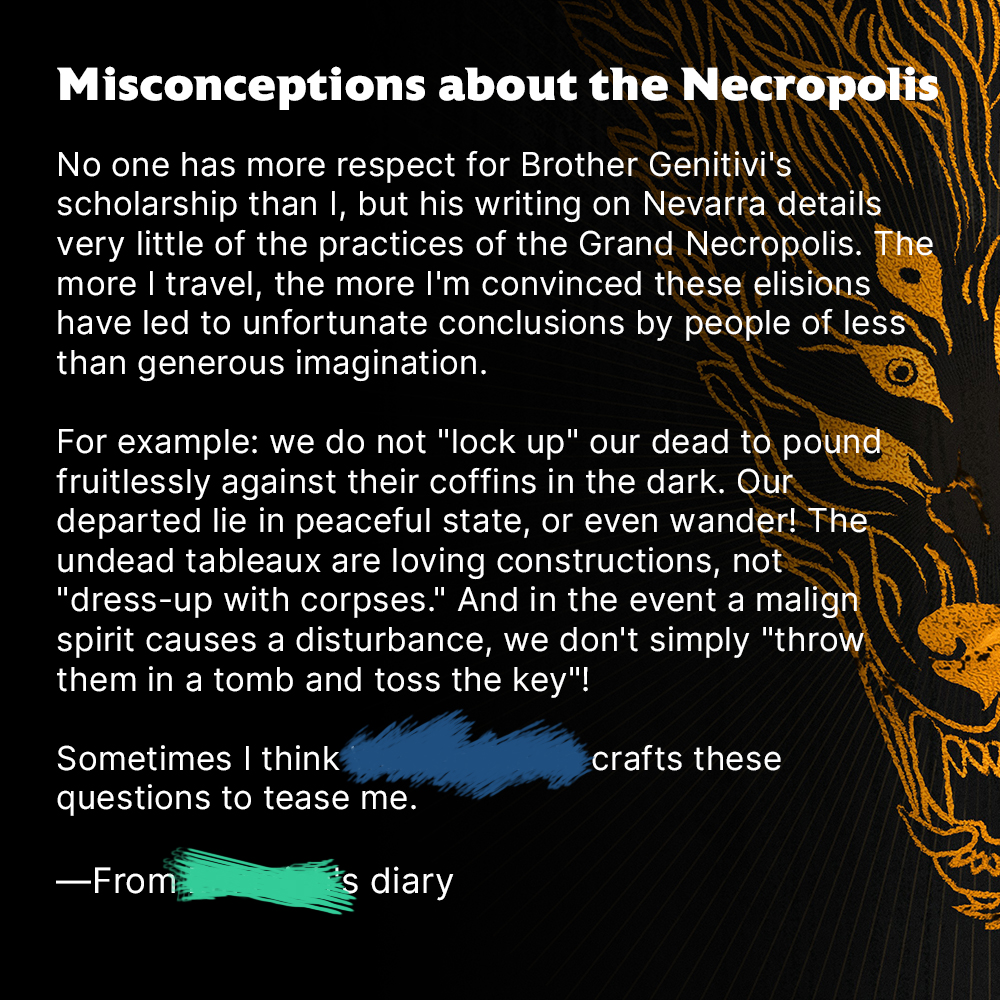
Sylvia Feketekuty: Hi, I’m a senior writer on Dreadwolf. I wrote of one of the codex entries here, “Misconceptions about the Necropolis” (as well as the character who “penned” the entry). These codices are just a tiny snippet of the game, but we wanted to share them as a springboard for talking about our writing and editing process.
Sometimes, when I tell people I write for games, they politely try to figure out how to ask, "But writing dialogue doesn’t take up your entire day every day, does it?" Truthfully, no. I'm responsible for coming up with plots, characters, and dialogue, but also for designing missions with our level designers. I work with them on pacing, information flow, and addressing many, many revisions as feedback comes in.
We're also responsible for a lot of non-voiced text: codex entries, notes in the world, item descriptions, weapon names, etc. A huge part of my job is just explaining the narrative needs of my characters and missions to other departments and coordinating it all with them.
It sounds like you two do more than the average person might expect an editor or writer to do. How do you two work together, then?
Sylvia: Way early on during the concepting stages, the editing team gives their feedback with the rest of the narrative team on high-level stuff like the new characters, plot, and themes. Once first-draft writing for a character or major mission is complete, we also have editors give us their formal feedback during our big peer reviews.
Ryan: At this stage, as we near preproduction, editors talk with writers about big-picture topics like characters, lore, and themes. These elements need the most time. Editing starts broadly and becomes detailed later in the process because it doesn’t help a writer to hear, “This is a run-on sentence,” when we’re still five drafts away from final. We save line edits for last. Until then, editors try to hold their tongues on grammar and punctuation.
Sylvia: After the peer review, when revisions are done and we’re in a position to start recording voiced dialogue, I work more closely with the editing team. Editors will suggest better ways to make one sentence flow into the next, spot inconsistencies, and point out when I’ve written something nonsensical. Every editor also “owns” certain character voices, just like writers do, and I’ll often go to them to hash out something for a particular character or to get a second opinion.
Ryan: Here, in the final drafts, no edit is too picky. This is where editors tweak the writing with changes to grammar, punctuation, and flow and where the passive voice dies a swift death. We read lines aloud at our desks while examining lore, tone, voice, and other details that change how a line reads in the recording booth or appears in the subtitles. Voice-recording notes and plot summaries are finalized, too. All this fine-tuning involves close work between a writer and editor while we pass edits back and forth, fix this, change that, change it back, debate, agree, and finally send it off for recording and translation.
So from the very beginning to the very end, our editors and writers are in lockstep with each other. What about the rest of the devs and other teams?
Ryan: Editors are the bridge between the writers and out-of-studio partners like actors and localizers. Once final drafts are complete, our game dialogue is sent to our in-house performance team, voice actors, and translators, all working in numerous languages. Editors work with those teams daily and are the troubleshooters when technical or cultural concerns arise. Sometimes, an English joke just doesn’t land in the localized copy, or maybe we learn that a name we chose for an idyllic village in Thedas has an inappropriate meaning in another language.
Sylvia: One of the best Dragon Age: Inquisition™ translator questions I ever saw was from a German translator who wanted to know what one character meant when he talked about “dancers with tassels.”
I mentioned this above, but most of my cross-team work is keeping up communication. Does the audio team have all the context they need? Does Character Art know a plot point requires an alternate character outfit? People often compare narrative games to movies, but a lot of them are nothing like movies, structurally speaking. RPGs the size of ours are more like a full season of a bizarrely nonlinear television series with so many mutable, moving parts.
That definitely paints quite the picture. You mentioned your work on DA:I just then, too. What about on Dreadwolf? What’s it like writing for the next game?
Sylvia: It’s been eight years since our last DA game came out. I’ve seen a lot of adults fondly reminiscing about how they played it as teens! Dragon Age: Dreadwolf has been a balance of providing answers to long-standing questions for veteran fans while making a game that new players, or someone who only played DA:I years ago, can also get into.
Ryan: Unlike the vast galaxies we explore in our other franchises, Dragon Age: Dreadwolf returns us to Thedas, where we can revisit friends and places that are familiar. Some fans haven’t spent time with Dragon Age since the 2014 release of Inquisition, while others have read every comic and story published since. Others never played a Dragon Age game at all and have no idea who the bald guy is (he’s Solas).
It’s a varied audience, and development for Dreadwolf has included conversations about how the team can simultaneously reward our returning fans and welcome new ones.
Sylvia: There are other things, of course, but we can’t really get into that until the game comes out.
Well, we’ll see what the future holds, then. If you were speaking to a fan, new or old, what would you tell them makes a Dragon Age game unique?
Sylvia: To me, BioWare has always carried the old-school D&D legacy in its veins. I try to inject some of what I love about tabletop roleplaying into my work: bizarre encounters, prideful villains, adventurers thrust together, arcs with big stakes that retain a sense of playfulness or adventure. It’s everything I’ve liked in the best fantasy tabletop games I’ve played in.
Ryan: For me, it's the characters. A Dragon Age story is full of heroes you want to visit a Kirkwall tavern with, or at a stylish Antivan party; travelling with friends whose witty banter makes the time fly by. The greatest compliment fans give our characters is the years of art, cosplay, and fan fiction that Dragon Age has inspired. That’s a sincere connection between our audience and our creations. And a villain who makes people want to spit on the ground at the mention of their name? Even better.
Though we can’t yet show our community our characters acting in-game, dialogue isn’t our only option. What about these codex entries? Is that something you could talk about?
Ryan: Yes! Codex entries are valuable because they provide information that might otherwise disrupt the flow of the game. For example, players might want details about the Grand Necropolis in Nevarra, but characters shouldn’t sound like tour guides. Before any writing, the narrative team discusses which entries are required and which aren’t. It’s crucial to properly time codex unlocks with player progression. No one wants a dozen entries only ten minutes into the game, but interested players shouldn’t have to wait long to learn more about the people, places, and concepts introduced. Does a codex unlock when something’s first mentioned? When a related character appears? Is the entry only required if they actually interact with said thing?
Sylvia: Making all our codex entries “in-world” (letters, books, notes, etc.) gives us ways to play with information. I chose the “Misconceptions about the Necropolis” codex to show everyone because it was really fun to write. I wanted the in-game author to be frustrated with Brother Genitivi’s portrayal of the Necropolis while also trying to deny the depth of his irritation with said world-famous scholar. It’s a diary, yet we see the author still feels obligated to exercise a measure of decorum in his private writing. And the micro-revelation at the end is that it’s someone he knows in real life, not far-off Genitivi, who is needling the poor guy about Nevarra’s death rituals.
It’s fun to layer things like this, and players are savvy about those layers. They pick up (and I think appreciate) the character coming through. It’s also a collaborative creative process. My Necropolis codex entry, like many others, was edited by Cameron Harris, another of our editors. In this case, Cameron caught that I had set file information incorrectly and also adjusted the overall stylization for consistency
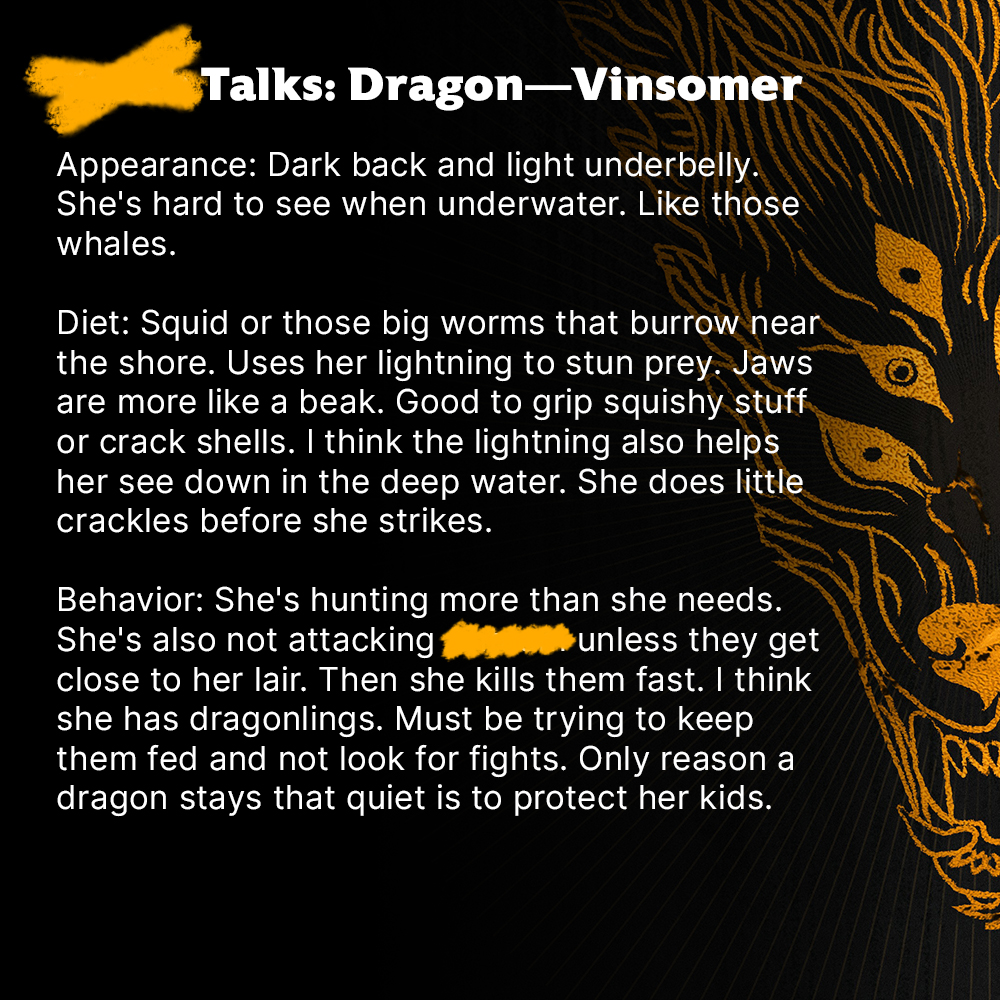
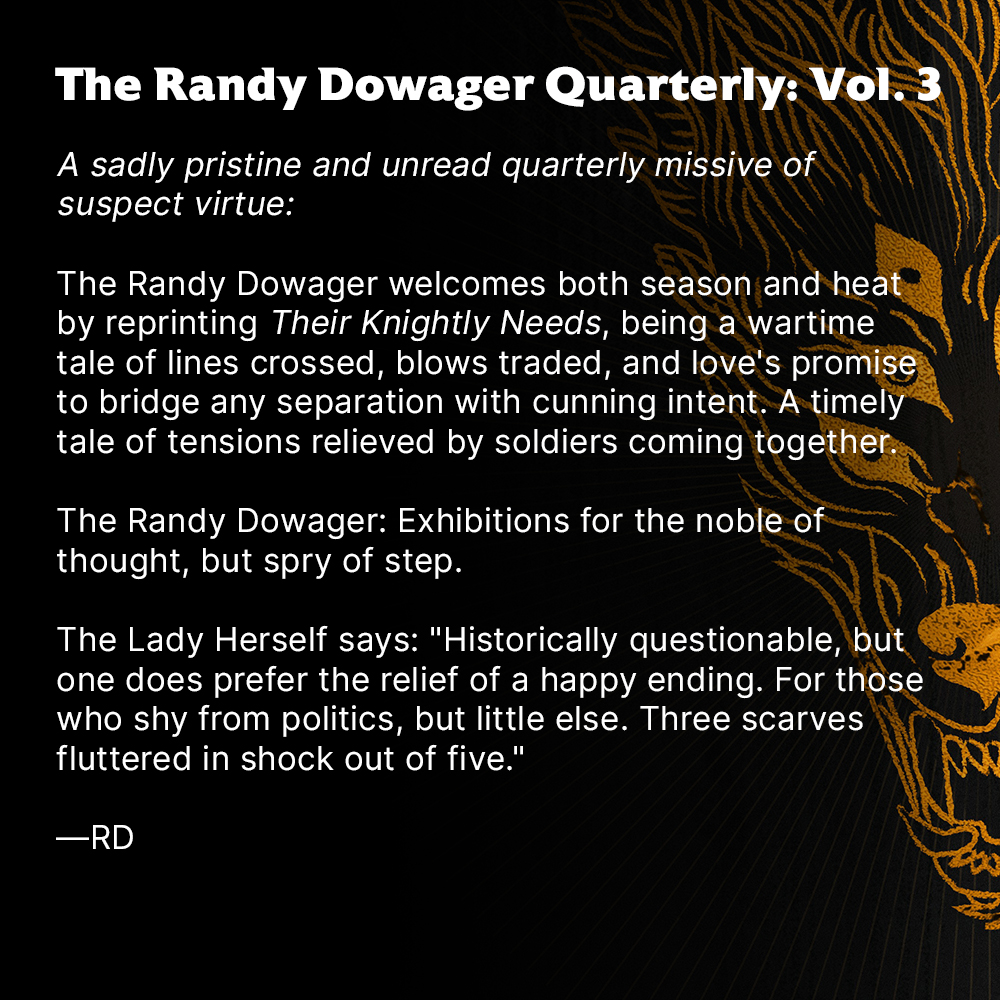
Here are a couple more codex entries for you. Let us know what you think of them!
We hope you enjoyed this first discussion about how our writing and editing teams are thinking about Dreadwolf! Every step of the way, we’re working together as a team, even in ways you might not imagine. From integrating written materials into the engine itself to our devs doing placeholder dialogue for characters, it’s a process that evolves over time.
But your efforts never stop, either! Naturally, when Solas shows up, so do many of you, and with incredible creations, no less. So in honor of the Dread Wolf himself, we wanted to showcase some amazing pieces we’ve seen.
Every day, the game gets one step closer to our next big development milestone—and one step closer to where it’s going to be when you play it. But these changes don’t just happen. They’re being worked on by the teams of people shaping this next adventure for you—carrying the vision together on our road to launch.
We want to keep showing you what we’re up to, so let us know if you like what you’re seeing! We have some fun stuff planned, so be sure to keep an eye out for our upcoming BCUs, one of which will include a look at what our designers are working on!
Until next then, may the Dread Wolf take you.
—The BioWare Team." ]]
Hey! Care to do us the honor of introducing yourselves and telling our community a little bit about what you do?
Ryan Cormier: Hello! I’m one of three narrative editors on Dragon Age: Dreadwolf. Our job is to ensure BioWare’s stories are told with clarity, consistency, and accuracy. That might mean correcting comma splices in a codex entry, deciding if a hero’s dramatic speech carries on one line too long, reviewing plot points, or helping a writer choose which scene to tweak without impacting the overall arc. Somewhere in between, we’re spell-checking some ridiculously long elven word or standardizing a character’s voice.
Sylvia Feketekuty: Hi, I’m a senior writer on Dreadwolf. I wrote of one of the codex entries here, “Misconceptions about the Necropolis” (as well as the character who “penned” the entry). These codices are just a tiny snippet of the game, but we wanted to share them as a springboard for talking about our writing and editing process.
Sometimes, when I tell people I write for games, they politely try to figure out how to ask, "But writing dialogue doesn’t take up your entire day every day, does it?" Truthfully, no. I'm responsible for coming up with plots, characters, and dialogue, but also for designing missions with our level designers. I work with them on pacing, information flow, and addressing many, many revisions as feedback comes in.
We're also responsible for a lot of non-voiced text: codex entries, notes in the world, item descriptions, weapon names, etc. A huge part of my job is just explaining the narrative needs of my characters and missions to other departments and coordinating it all with them.
It sounds like you two do more than the average person might expect an editor or writer to do. How do you two work together, then?
Sylvia: Way early on during the concepting stages, the editing team gives their feedback with the rest of the narrative team on high-level stuff like the new characters, plot, and themes. Once first-draft writing for a character or major mission is complete, we also have editors give us their formal feedback during our big peer reviews.
Ryan: At this stage, as we near preproduction, editors talk with writers about big-picture topics like characters, lore, and themes. These elements need the most time. Editing starts broadly and becomes detailed later in the process because it doesn’t help a writer to hear, “This is a run-on sentence,” when we’re still five drafts away from final. We save line edits for last. Until then, editors try to hold their tongues on grammar and punctuation.
Sylvia: After the peer review, when revisions are done and we’re in a position to start recording voiced dialogue, I work more closely with the editing team. Editors will suggest better ways to make one sentence flow into the next, spot inconsistencies, and point out when I’ve written something nonsensical. Every editor also “owns” certain character voices, just like writers do, and I’ll often go to them to hash out something for a particular character or to get a second opinion.
Ryan: Here, in the final drafts, no edit is too picky. This is where editors tweak the writing with changes to grammar, punctuation, and flow and where the passive voice dies a swift death. We read lines aloud at our desks while examining lore, tone, voice, and other details that change how a line reads in the recording booth or appears in the subtitles. Voice-recording notes and plot summaries are finalized, too. All this fine-tuning involves close work between a writer and editor while we pass edits back and forth, fix this, change that, change it back, debate, agree, and finally send it off for recording and translation.
So from the very beginning to the very end, our editors and writers are in lockstep with each other. What about the rest of the devs and other teams?
Ryan: Editors are the bridge between the writers and out-of-studio partners like actors and localizers. Once final drafts are complete, our game dialogue is sent to our in-house performance team, voice actors, and translators, all working in numerous languages. Editors work with those teams daily and are the troubleshooters when technical or cultural concerns arise. Sometimes, an English joke just doesn’t land in the localized copy, or maybe we learn that a name we chose for an idyllic village in Thedas has an inappropriate meaning in another language.
Sylvia: One of the best Dragon Age: Inquisition™ translator questions I ever saw was from a German translator who wanted to know what one character meant when he talked about “dancers with tassels.”
I mentioned this above, but most of my cross-team work is keeping up communication. Does the audio team have all the context they need? Does Character Art know a plot point requires an alternate character outfit? People often compare narrative games to movies, but a lot of them are nothing like movies, structurally speaking. RPGs the size of ours are more like a full season of a bizarrely nonlinear television series with so many mutable, moving parts.
That definitely paints quite the picture. You mentioned your work on DA:I just then, too. What about on Dreadwolf? What’s it like writing for the next game?
Sylvia: It’s been eight years since our last DA game came out. I’ve seen a lot of adults fondly reminiscing about how they played it as teens! Dragon Age: Dreadwolf has been a balance of providing answers to long-standing questions for veteran fans while making a game that new players, or someone who only played DA:I years ago, can also get into.
Ryan: Unlike the vast galaxies we explore in our other franchises, Dragon Age: Dreadwolf returns us to Thedas, where we can revisit friends and places that are familiar. Some fans haven’t spent time with Dragon Age since the 2014 release of Inquisition, while others have read every comic and story published since. Others never played a Dragon Age game at all and have no idea who the bald guy is (he’s Solas).
It’s a varied audience, and development for Dreadwolf has included conversations about how the team can simultaneously reward our returning fans and welcome new ones.
Sylvia: There are other things, of course, but we can’t really get into that until the game comes out.
Well, we’ll see what the future holds, then. If you were speaking to a fan, new or old, what would you tell them makes a Dragon Age game unique?
Sylvia: To me, BioWare has always carried the old-school D&D legacy in its veins. I try to inject some of what I love about tabletop roleplaying into my work: bizarre encounters, prideful villains, adventurers thrust together, arcs with big stakes that retain a sense of playfulness or adventure. It’s everything I’ve liked in the best fantasy tabletop games I’ve played in.
Ryan: For me, it's the characters. A Dragon Age story is full of heroes you want to visit a Kirkwall tavern with, or at a stylish Antivan party; travelling with friends whose witty banter makes the time fly by. The greatest compliment fans give our characters is the years of art, cosplay, and fan fiction that Dragon Age has inspired. That’s a sincere connection between our audience and our creations. And a villain who makes people want to spit on the ground at the mention of their name? Even better.
Though we can’t yet show our community our characters acting in-game, dialogue isn’t our only option. What about these codex entries? Is that something you could talk about?
Ryan: Yes! Codex entries are valuable because they provide information that might otherwise disrupt the flow of the game. For example, players might want details about the Grand Necropolis in Nevarra, but characters shouldn’t sound like tour guides. Before any writing, the narrative team discusses which entries are required and which aren’t. It’s crucial to properly time codex unlocks with player progression. No one wants a dozen entries only ten minutes into the game, but interested players shouldn’t have to wait long to learn more about the people, places, and concepts introduced. Does a codex unlock when something’s first mentioned? When a related character appears? Is the entry only required if they actually interact with said thing?
Sylvia: Making all our codex entries “in-world” (letters, books, notes, etc.) gives us ways to play with information. I chose the “Misconceptions about the Necropolis” codex to show everyone because it was really fun to write. I wanted the in-game author to be frustrated with Brother Genitivi’s portrayal of the Necropolis while also trying to deny the depth of his irritation with said world-famous scholar. It’s a diary, yet we see the author still feels obligated to exercise a measure of decorum in his private writing. And the micro-revelation at the end is that it’s someone he knows in real life, not far-off Genitivi, who is needling the poor guy about Nevarra’s death rituals.
It’s fun to layer things like this, and players are savvy about those layers. They pick up (and I think appreciate) the character coming through. It’s also a collaborative creative process. My Necropolis codex entry, like many others, was edited by Cameron Harris, another of our editors. In this case, Cameron caught that I had set file information incorrectly and also adjusted the overall stylization for consistency
Here are a couple more codex entries for you. Let us know what you think of them!
We hope you enjoyed this first discussion about how our writing and editing teams are thinking about Dreadwolf! Every step of the way, we’re working together as a team, even in ways you might not imagine. From integrating written materials into the engine itself to our devs doing placeholder dialogue for characters, it’s a process that evolves over time.
But your efforts never stop, either! Naturally, when Solas shows up, so do many of you, and with incredible creations, no less. So in honor of the Dread Wolf himself, we wanted to showcase some amazing pieces we’ve seen.
Every day, the game gets one step closer to our next big development milestone—and one step closer to where it’s going to be when you play it. But these changes don’t just happen. They’re being worked on by the teams of people shaping this next adventure for you—carrying the vision together on our road to launch.
We want to keep showing you what we’re up to, so let us know if you like what you’re seeing! We have some fun stuff planned, so be sure to keep an eye out for our upcoming BCUs, one of which will include a look at what our designers are working on!
Until next then, may the Dread Wolf take you.
—The BioWare Team." ]]
"Drive me closer! I want to hit them with my sword!"
Re: Bioware General (Mass Effect/Dragon Age/Other)
"Pumpkin Head Helmet (LE3)"
Zaeed Armour for Shepard (LE2)"
Zaeed Armour for Shepard (LE3)"
"LE2 New Upgrades (unlocked hidden content)"
"Bioluminescent Tali Photo"

Zaeed Armour for Shepard (LE2)"
Zaeed Armour for Shepard (LE3)"
"LE2 New Upgrades (unlocked hidden content)"
"Bioluminescent Tali Photo"
"Drive me closer! I want to hit them with my sword!"
Re: Bioware General (Mass Effect/Dragon Age/Other)


"Drive me closer! I want to hit them with my sword!"
Re: Bioware General (Mass Effect/Dragon Age/Other)


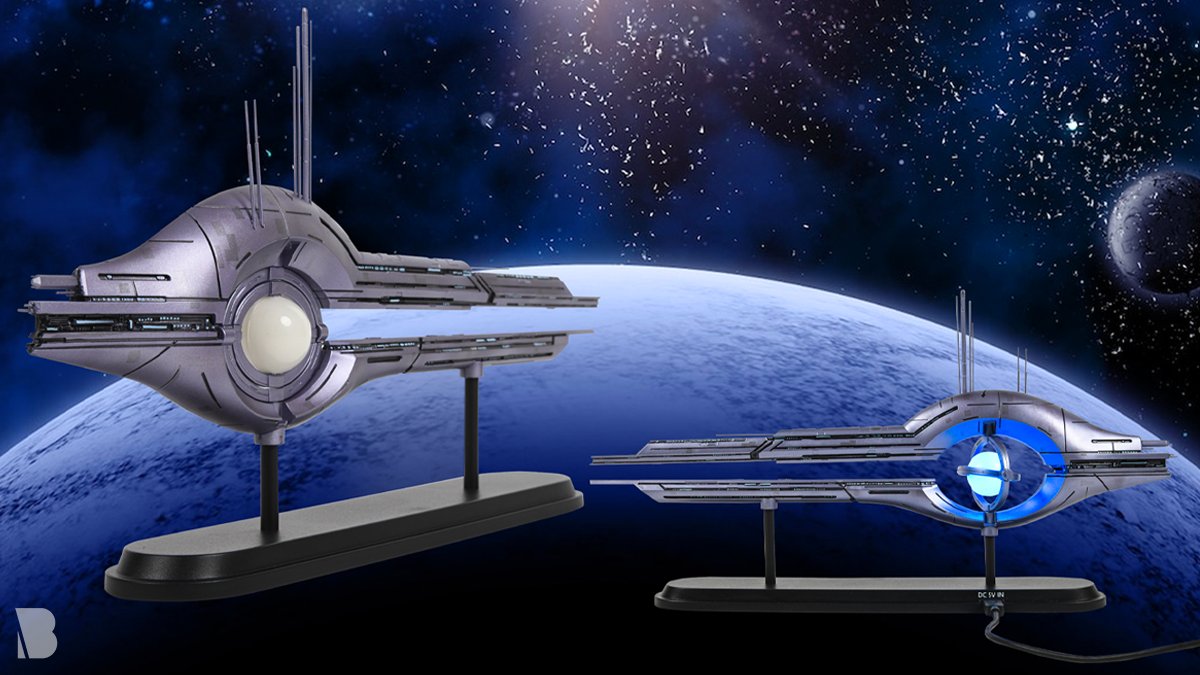

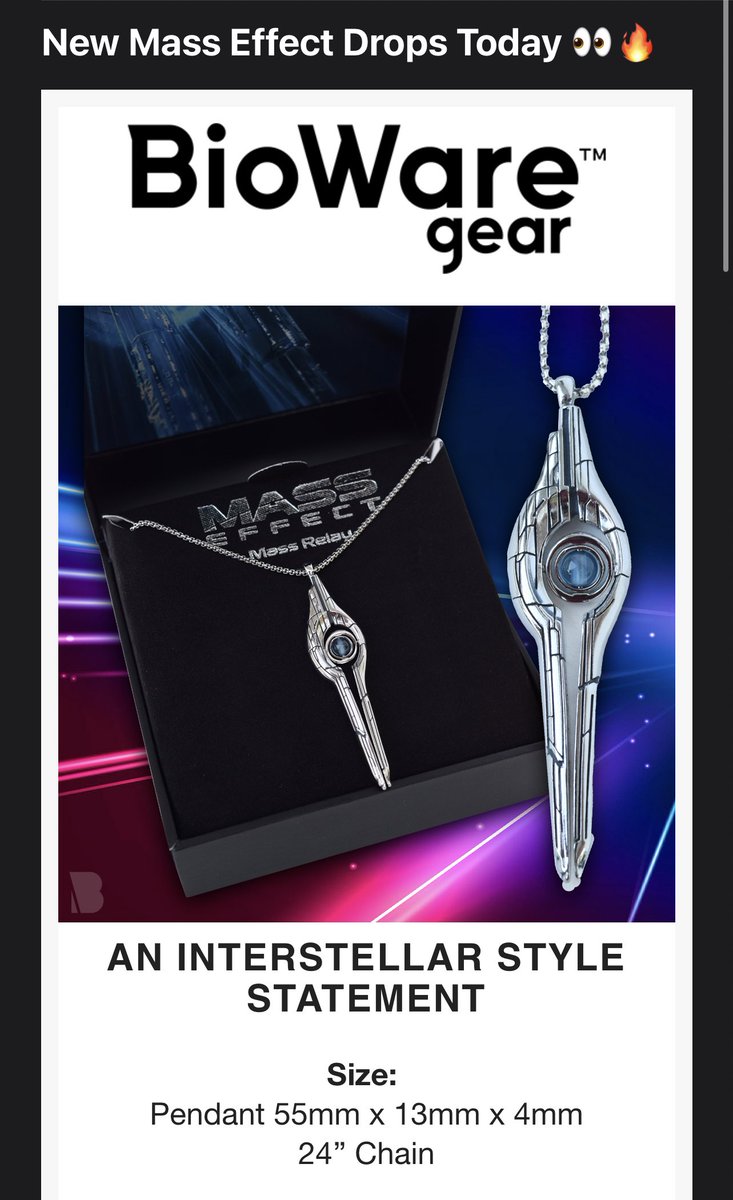
First, reducing the Geth uprising to a simplistic "no more masters" scenario is... not at all accurate to what both ME2 and ME3 present, from the geth's own perspective no less, and does the whole geth-quarian storyline a disservice.
And second, what, no “Reclaim Rannoch” or “Avenge the Exile” coin to balance that out in the interest of fairness?

"Drive me closer! I want to hit them with my sword!"
Re: Bioware General (Mass Effect/Dragon Age/Other)
Dragaros wrote:First, reducing the Geth uprising to a simplistic "no more masters" scenario is... not at all accurate to what both ME2 and ME3 present, from the geth's own perspective no less, and does the whole geth-quarian storyline a disservice.
And second, what, no “Reclaim Rannoch” or “Avenge the Exile” coin to balance that out in the interest of fairness?
It's a baffling product, like something you'd get from a marketing guy looking at data on the demographics of who buys the gear, and he has the ME wiki open on his phone.
Re: Bioware General (Mass Effect/Dragon Age/Other)
"Drive me closer! I want to hit them with my sword!"
Re: Bioware General (Mass Effect/Dragon Age/Other)
"Drive me closer! I want to hit them with my sword!"
Re: Bioware General (Mass Effect/Dragon Age/Other)

"Drive me closer! I want to hit them with my sword!"
Re: Bioware General (Mass Effect/Dragon Age/Other)


"Drive me closer! I want to hit them with my sword!"
Re: Bioware General (Mass Effect/Dragon Age/Other)
https://twitter.com/masseffect/status/1 ... 5226766336
https://www.gamesradar.com/goldenjoysti ... UZ,6OVHF,1

https://www.gamesradar.com/goldenjoysti ... UZ,6OVHF,1
"Drive me closer! I want to hit them with my sword!"
Re: Bioware General (Mass Effect/Dragon Age/Other)
"Drive me closer! I want to hit them with my sword!"
Re: Bioware General (Mass Effect/Dragon Age/Other)
"Drive me closer! I want to hit them with my sword!"
Re: Bioware General (Mass Effect/Dragon Age/Other)

"Drive me closer! I want to hit them with my sword!"
Re: Bioware General (Mass Effect/Dragon Age/Other)
Did they kiss?
I can't imagine what dev milestone they'd be at right now.
I can't imagine what dev milestone they'd be at right now.
Re: Bioware General (Mass Effect/Dragon Age/Other)

"Drive me closer! I want to hit them with my sword!"
Re: Bioware General (Mass Effect/Dragon Age/Other)


https://twitter.com/bioware/status/1585315438216372225
https://www.ea.com/games/dragon-age/new ... -milestone
[[ Hello,
In my last blog, back in February, I talked about the next Dragon Age™ game entering the production phase. Well, we’ve come a very long way since then, and the team is incredibly happy to announce a huge step forward in the development of the game you now know as Dragon Age: Dreadwolf™: We have just completed our Alpha milestone!
Up to this point, we’ve been working hard on the various parts of the game, but it’s not until the Alpha milestone that a game all comes together. Now, for the first time, we can experience the entire game, from the opening scenes of the first mission to the very end. We can see, hear, feel, and play everything as a cohesive experience.
NOW WHAT?
Of course, the game is not finished by any means, but Alpha is one of the most important game development milestones for a number of reasons. First and foremost, we can now turn our sights toward bringing the visual fidelity to its final form and iterating on gameplay features. The big question now is, “Where do we focus our efforts?” To answer that, we solicit feedback from a number of sources, including our Community Council members who each have unique perspectives and experiences, our quality verification team, and extensive internal playtesting. Gathering feedback from multiple sources gives us the greatest insight on where we need to spend more time improving the experience.
Additionally, we can now evaluate the game's pacing, how relationships evolve over time, and the player’s progression, as well as narrative cohesion—essentially how the story comes together. We can take the story we’ve written and see if we’re expressing it well through the characters, dialogue, cinematics, and ultimately, the player’s journey. Now that we have the ability to do a complete playthrough, we can iterate and polish on the things that matter most to our fans.
Hitting Alpha was the culmination of so much effort from the entire team and we used this milestone as an opportunity to come together and celebrate. We held a hybrid-style event with people onsite while others joined remotely and the team showcased their work to everyone at BioWare. We even took some time to do something fun and non-work related—a virtual escape room where we had to work together to help someone on camera find their way out. It was a really great time, and no matter where our devs are, it's important to share these types of moments together.
START TO FINISH
Now that we’re finally able to experience the entire game, for me, my favorite part is the characters. Whether followers, allies, or villains, they’re woven into the game in ways that take a concept that’s always been a part of the Dragon Age DNA—stories about people—and push it further than ever before. The characters help contextualize the world and the stakes, and I can’t wait until we’re able to start really discussing them in depth.
It’s also exciting to finally be able to bring our fans to parts of the world that we’ve previously hinted at, but never been able to fully explore—like the city of Minrathous, the capital of the Tevinter Empire. We’ve talked about Minrathous in previous games, and now you’ll finally be able to visit! It’s a city built on and fuelled by magic, and the ways in which that has come through in its visual identity, and what that looks like in comparison to previous cities we’ve visited in Dragon Age, are pretty spectacular.
As I mentioned earlier, the Alpha milestone is an extremely important one for us, but there’s more work to be done. We also want to continue being transparent with you, our community, and keep you up to date on what we’re crafting. Hopefully you’ve been enjoying our development updates on Dreadwolf this year as we’ll be looking to share more in the future.
IN CLOSING
Of course, Dreadwolf isn’t the only thing happening here at BioWare™! We have a team hard at work envisioning what the future holds for a new single-player Mass Effect™ game. And we look forward to celebrating our community on N7 Day next month. The SWTOR team also continues to work on their next update, so keep an eye on SWTOR.com and their social media accounts for any and all details on the coming game update.
It’s an incredible time at BioWare! We have so many cool things to show you in the future. Until then, thanks for being part of our community. We couldn’t do this without you.
Stay well,
Gary McKay
General Manager ]]
"Drive me closer! I want to hit them with my sword!"
Re: Bioware General (Mass Effect/Dragon Age/Other)

Just rambling speculation, but if they do introduce some kind of super mass relay that connects the two galaxies, it would allow them to play in both sandboxes at the same time, provided they do jump ahead 600 years so the time scale is balanced out. Hypothetically if they want the Ryder twins to meet Liara, they could. Hypothetically, if they want to show quarians living on Rannoch and finally do something with the quarian ark in the same game, they could. Hypothetically if the Geth really were secret benefactors/hitchhikers to the Andromeda Initiative, that would be one way to bring them back in a post-Destroy galaxy --And they would be Geth who didn't get the Reaper code upgrade either, as they would have left well before.
"Drive me closer! I want to hit them with my sword!"
Re: Bioware General (Mass Effect/Dragon Age/Other)
Dragaros wrote:
Just rambling speculation, but if they do introduce some kind of super mass relay that connects the two galaxies, it would allow them to play in both sandboxes at the same time, provided they do jump ahead 600 years so the time scale is balanced out. Hypothetically if they want the Ryder twins to meet Liara, they could. Hypothetically, if they want to show quarians living on Rannoch and finally do something with the quarian ark in the same game, they could. Hypothetically if the Geth really were secret benefactors/hitchhikers to the Andromeda Initiative, that would be one way to bring them back in a post-Destroy galaxy --And they would be Geth who didn't get the Reaper code upgrade either, as they would have left well before.
They have the plot hook already there. "Oh yeah, the ark ships dropped these little beacons all the along the way like breadcrumbs and no don't ask why that works when galaxies are in motion shut up and then the Old One tech something something we can phone home now."
Interesting point on the Geth tho, would be the "cleanest" way to explain it. But to what end? The Andromeda plot was totally self-contained, and post Reapening Milky Way is fertile with potential plots (fan service). That said I did have a soft spot for ME:A, despite...everything. So I wouldn't mind it existing in some form.
Re: Bioware General (Mass Effect/Dragon Age/Other)

"Drive me closer! I want to hit them with my sword!"
Re: Bioware General (Mass Effect/Dragon Age/Other)


"Drive me closer! I want to hit them with my sword!"
Re: Bioware General (Mass Effect/Dragon Age/Other)
"Drive me closer! I want to hit them with my sword!"
Re: Bioware General (Mass Effect/Dragon Age/Other)

[[ "The next EA earnings conference call (which will be for Q2 2023) is on November 1st 2022 at 2pm PT. Sometimes snippets emerge from these.
Relevant snippets from this earnings conference call:
Q. “[…] The singleplayer stuff you’re building, is some of the motivation there, at the end of the day, somewhat financial, where, my guess is, the predictability of the success of, whether it’s the licensed IP, or maybe some of the stuff out of BioWare, where it’s easier to kind of do the math on the ROI and it’s more predictable and you feel that there’s a need for those types of games every single year?”
A. “Entertainment has been built on the creation of worlds, the development of characters and the telling of stories since time began. We’ve experienced it in different forms over time, we had to go to the theatre, then we would read about it, then we’d listen to it on the radio, then we watch it in the movies, then we watch it on television, now we experience that through games. And it is how we entertain ourselves first and foremost as we think about these great storytelling opportunities. And so again, as a public-traded company we’re always thinking about the financial return of the things that we do, but as we think about the full breadth of the consumption of sport and entertainment, these deep social experiences are very much about how we enjoy entertainment, but the creation of worlds, the development of characters and telling of stories is kind’ve the central lifeblood of entertainment more broadly. And as we think about this it’s not just about predictability because again there have been crappy worlds, and crappy characters and character stories being told, and so we work with our partners and we work with our own IP to do things in a truly compelling way, and we think it represents an extraordinary business opportunity as we don’t believe that humanity is gonna turn its back on the nature of storytelling, and as we look to the future the nature of storytelling is almost certainly going to be interactive.”
[…]
Q. “[…] For lack of a better word, I guess, the lore and the body of work that exists in Sims 4, because as you say the game is like 10 years old now and there’s a lot of content that you’ve released over the years. Should we be thinking about how Sims 5, when it’s released, may feel a little bit empty? And I think this something that we worried about for Battlefield in the past, so, you know, what can we do as we think about sequels and follow-ups generally, does this mean that things need to spend more time in development for that additional content? How should we think about that?”
A. “[…] I think the question is probably broader than just the Sims. […] We have other things, like the titles that come out of BioWare, that really is about giving them time to build out these worlds and create these characters and tell these stories in a new, innovative and creative way. […] We’re looking at every franchise in its own stead and we’re asking ourselves, ‘what is the right thing to do with respect to this franchise?’ […] For some like our BioWare franchises it’s about giving time to really build out these worlds, characters and storylines.”
The Electronic Arts Q3 2023 Earnings Conference Call is on January 31st 2023 at 2pm PT." ]]
"Drive me closer! I want to hit them with my sword!"
Who is online
Users browsing this forum: No registered users and 20 guests