
Autumn in sight edition: Yearly costs are all paid for, time to donate if you can!//DA4 concept art, Anthem revamp, ME HD remaster, hey, it's something
Bioware General (Mass Effect/Dragon Age/Other)

Re: Bioware General (Mass Effect/Dragon Age/Other)


"Drive me closer! I want to hit them with my sword!"
Re: Bioware General (Mass Effect/Dragon Age/Other)


"Drive me closer! I want to hit them with my sword!"
Re: Bioware General (Mass Effect/Dragon Age/Other)

"On Dark Horse’s website the release date for this has updated to September 6th 2023. This is the same currently-listed release date for the paperback collection of Dragon Age: The Missing comic issues 1-4."
"Drive me closer! I want to hit them with my sword!"
Re: Bioware General (Mass Effect/Dragon Age/Other)


"Drive me closer! I want to hit them with my sword!"
Re: Bioware General (Mass Effect/Dragon Age/Other)
"Drive me closer! I want to hit them with my sword!"
Re: Bioware General (Mass Effect/Dragon Age/Other)
"Drive me closer! I want to hit them with my sword!"
Re: Bioware General (Mass Effect/Dragon Age/Other)
"Drive me closer! I want to hit them with my sword!"
Re: Bioware General (Mass Effect/Dragon Age/Other)
https://www.youtube.com/watch?v=Ggza17wIjCs
Of course the dude who goes by the name “That Cerberus Guy” is a self-proclaimed Kai Leng simp and dislikes the quarians. I’m shocked, shocked I tell you!
Of course the dude who goes by the name “That Cerberus Guy” is a self-proclaimed Kai Leng simp and dislikes the quarians. I’m shocked, shocked I tell you!
"Drive me closer! I want to hit them with my sword!"
Re: Bioware General (Mass Effect/Dragon Age/Other)
Mazder wrote:Hmmmmm
Ah, yes. Cool Tali merch. _Take my money_!
Is that pic from the LE or a new creation? I haven't played it yet, but I'd like to know so I can pour over every detail of this when it arrives.
edit: $15 shipping, Canadiansssssssssssssssss
Re: Bioware General (Mass Effect/Dragon Age/Other)
It's the one from the LE
Re: Bioware General (Mass Effect/Dragon Age/Other)

"Drive me closer! I want to hit them with my sword!"
Re: Bioware General (Mass Effect/Dragon Age/Other)
https://www.pcgamer.com/mass-effect-and ... -a-sequel/
https://www.gamesradar.com/mass-effect- ... ch-better/
https://www.eurogamer.net/making-mass-e ... and-beyond
"Making Mass Effect, from the birth of a trilogy to Andromeda and beyond: I wonder sometimes whether BioWare will ever do another trilogy of games again, because the more time that passes, the more I appreciate what an ambitious idea that was, with Mass Effect. Three games that would tell one story and that you could carry one hero all the way through - that's not just bold, that's borderline outrageous, especially when you consider all the choices and consequences typically in one of the studio's games. And it's only now, really, when I see no one else attempting to do the same thing - not to that degree, anyway - I realise how special it was.
Perhaps it was so hard to do, BioWare never wanted to do it again. It's a thought that leads me down a rabbit hole and to someone I've dubbed Mr Mass Effect: Mac Walters, the writer who spent 19 years at BioWare, and most of it writing and making Mass Effect. He was senior writer on ME1, lead writer on ME2 and ME3, creative director (eventually) on Andromeda, and then project director on the Legendary Edition remaster. He wrote Mass Effect books and graphic novels, and, it turns out, he was there at the very beginning, when a core group of people - project leader Casey Hudson, systems designer Preston Watamaniuk, and writer Drew Karpyshyn - dreamt Mass Effect up.
And the trilogy idea was already there then, he says. "It was definitely Casey [Hudson's] idea," Walters tells me, in a larger podcast interview you'll see embedded in this piece, and is available wherever you listen to podcasts.
"I would often sit in their office and we would [talk about], 'What is the game going to be?' But from the level of 'it was Jack Bauer in space' - that was an early thing that we talked about, and the idea of it being a trilogy of games. That was something that Casey had put a stamp on very early, even before, when I was still finishing off Jade Empire."
And the reasoning behind it being a trilogy was two-fold: one, to make it feel cinematic, in the way that the three-arc Star Wars story was. Hudson was apparently greatly inspired by Star Wars. "We often talked about Mass Effect 2 being the darker middle act, much like Empire [Strikes Back] - there was a lot of influence coming from that from day one."
Two: BioWare needed an exciting innovation to sell the series with. This was a new IP, remember - the studio had left Star Wars behind with Knights of the Old Republic, and was now striking out into space on its own. And a trilogy was exactly the kind of idea that would make people take notice of it. "Saying we're going to do three games in a franchise: okay that's challenging," says Walters. "But [saying] we're going to do three games where the choice and consequences actually carry over for you: that was the big bold innovation that we tackled."
On the very first design document, then, were sections for Mass Effect 2 and 3. Small sections, mind you. "At that time, we had maybe a generous paragraph of what we thought Mass Effect 2 might be," he says, "and literally a line on what Mass Effect 3 would be. And it would be very aspirational, like, 'Let's wrap this whole thing up!'"
The intention was to seed ideas that would grow through the series, but exactly where they'd end up or how they'd be resolved, they didn't know. The pervading feeling was, "We're not going to answer this now, and we don't know how or where or when we'll answer it, but we want to put the mystery in there and then pay it off some day going forward."
Walters remembers talking about the romance arcs a lot back then, and already there were ideas for Ashley and Kaidan to be potential romances that would stretch through the trilogy. "I remember even talking, early days, about having Ash and Kaidan - or whoever survives of course - fall away from you in the second game only to return in the third game, and this idea that if you stayed true to them there might be something different than if you didn't." And, of course, that idea made it into the final game.
But a lot of things were left open-ended simply because "we weren't sure where we wanted to take things". For instance, you've probably read about the different ideas BioWare originally had for the Reapers and what was going on there, and how it would all be wrapped up. The original lead writer, Drew Karpyshyn, had this whole Dark Energy idea that wasn't used. But he wasn't upset about that when I spoke him about it, in the wake of Mass Effect 3 being released. As he told me, "projects evolve, and you rarely end up in the place you expected when you first started".
Walters adds: "There's so much of the way that we handle story and world building in these IPs that's very organic. There's obviously things that you hash out before anyone starts really doing work to build the game, but then the actual building of the game is where I would say a majority of that world-building happens." Plus, "you don't know how the fans are going to respond". What if fans hate an idea you've really gone in on, or what if their tastes change? BioWare wasn't just committing to one game, after all, but three, stretched over a decade of development. It had to try and remain flexible.
The other benefit of putting off the worrying was it freed the team up creatively. "The fact that we created a suicide mission in Mass Effect 2, where any or all or none of the characters could survive, tells you that we weren't too daunted after [Mass Effect] One on complexity, because there couldn't be anything you could do that's more complex than that and then have to follow it up. So by the time we landed on that concept for the suicide squad," he says, "we often joked in the early days, 'Well I guess our future selves won't be too happy with this but it's a great idea so let's go ahead with it!'"
In other words, "we didn't let it hold us back", and it's an attitude Walters really loved seeing on the team. "Every once in a while we'd be like, 'Okay this is going to be challenging,' but we had that sort of 'we'll figure it out' mentality 'when the time is right'. And I'm so thankful for that, because if you think of all the things that people tend to talk about when they're referring to Mass Effect 2 [...] the suicide squad, the conflicts that you can have with your characters. All of that is, like you said, it's a spaghetti of conditionals and things like that in the background, that if we had taken too much time and said, 'Oh this is going to be hard, let's not do it,' well, Mass Effect 2 wouldn't have been what Mass Effect 2 was."
While Mass Effect 1 was in development, the team was preoccupied solely with getting Mass Effect 1 done. When Mass Effect 2 was developed and the team pulled in the conditionals from ME1, yes it was bigger than people expected, but confidence was still high, as represented by the complex suicide mission. But when work began on Mass Effect 3, it couldn't be put off any longer - team knew what it needed to do now would be tricky. "We also realised that it was going to be not just tricky but also probably more expensive," Walters says, in terms of the extra work the team would need to do.
"A lot of folk don't realise how much content is actually in Mass Effect 3 as opposed to the other games," he says, "simply because of all of those conditions. On a single playthrough, you're only going to see a fraction of what we actually created for Mass Effect 3 because all these other conditions can come into play - different people can be dead, different people can be alive, different people can like you or not like you."
In fact, he adds: "I think Mass Effect 3 is on par with being bigger than Mass Effect 2 and Mass Effect 1 combined." He saw this again recently while making the Legendary Edition of the game.
But an important detail to remember is that by that point, the team had made two Mass Effect games and were really familiar with the technology, had a template to build on, and intimately knew the characters and where their storylines were heading. BioWare could handle it because of the groundwork it laid making ME1 and ME2.
"In Mass Effect 1," Walters says, "we shipped so much content that you probably didn't see because it was meant to come out of the game. But it was actually still left in, hooked up, because we were still figuring out Unreal, we were figuring out the tools, we were figuring all that stuff. So if you actually cleaned it up and got more efficient with it, that's where we were at with ME3, and yet it was still so huge - just a massive amount of work.
"If you took Mass Effect 3," he adds, "content-wise, and said, 'Now build that but back when you're figuring everything out in Mass Effect 1,' it would have taken us ten years probably to do that, to figure it all out!"
So although resolving a trilogy with threads branching out "almost to infinity" was a daunting task, the team apparently managed it without many problems, according to Walters. "It is a feat that, because we were in it, we didn't realise how special it was," he says. "But if you just look at [it as] a work of interactive fiction across those three titles, and the fact that it holds up as a story, just that in and of itself is actually incredible.
"But the amount of work that we've done there to really let the players feel like they have autonomy, like 'it's my Shepard and it's my story', and there are so many of those versions of that story out there: even I don't have a full understanding of how crazy and complex and ultimately impressive it was that we were able to pull that off over the course of three games."
It begs the question, to come back to where I began, of why BioWare hasn't done something like the trilogy again. It certainly drew attention to the series, and I'm convinced it would do the same for any new game BioWare made now. But no, apparently it never came up. "I don't think we've ever talked about that again," Walters says. And the 'Why?' of it seems to be simply because, "We've done that - what else can we do?"
That doesn't mean all of the trilogy-linked ideas were dropped, though. The Dragon Age series has let you pull in saved-game data for a while, and although you can't play as the same character in all three existing games, you can import saved world states, and even go as far as to talk to your Hawke from DA2, in Dragon Age Inquisition, which is neat.
There's more trilogy thinking in Mass Effect Andromeda than I'd realised, too, because even though it wasn't envisaged as a new Mass Effect trilogy - and the tempatation must have been there - it was conceived from the very beginning as a linked series of games, which your choices and consequences could ripple through. "We knew that we wanted it to be a series, for sure," Walters says, "but not a trilogy per se. I think the idea of carrying plots and story and characters through the series, and choice and consequence, was actually part of it on Andromeda, but early days Andromeda, and I wasn't on the project then." (I'll come back to that last point.)
Instead, the big innovation with Andromeda was going to be a procedurally generated universe inspired by No Man's Sky - "something where you could really feel like you're actually exploring a universe", Walters says. But sadly it was one of the ideas the team could never quite make work. "Ultimately, that was too much at odds with a lot of the way that we tell stories, and the way that we create our content, which tends to be very bespoke - a lot of big set-pieces and things like that. It's hard to translate into a procedural world. But that was, at the start at least, that innovation that we were looking at, or what the teams were looking at."
To come back to the 'Walters not being on the Andromeda team at the beginning point': Walters, like many others in the original Mass Effect team, had gone to work on Anthem. Andromeda, remember, was primarily a BioWare Montreal game, not an Edmonton one. Walters, then, was narrative designer of Anthem, but he was pulled over to Andromeda when Mass Effect overlord Casey Hudson left BioWare in 2014, followed by Andromeda game director Gérard Lehiany shortly after. The project needed some core leadership and Walters was it.
Much has been made of Andromeda's difficult development and how ideas like the No Man's Sky procedurally generated universe, and the new Frostbite engine - and it being made by a much newer BioWare team - held things up. So when Walters eventually took over the reins, there was a lot of work still to do.
"It wasn't so much that it was in disarray or anything like that," he says, "but it was in that pivot point, in that sort of inflection of, 'Oh we can't do both procedural - all of this stuff - and fulfil all the wishes and hopes of our fanbase who really want to see a lot of this bespoke narrative written in a certain way.'
"It wasn't just making another Mass Effect game, which the team was well on their way to doing, it was how do we do it and also innovate in more of an open-world space?"
Mass Effect Andromeda would eventually come out in 2017, but all the difficulties with development had prevented it from reaching the heights of the previous Mass Effect games. Reviews were lukewarm to disappointed, sales were weaker than before, and in response to it, the entire Mass Effect series was put "on ice". To some degree, Walters can accept that. "I don't know if people were too harsh," he says, "we had set a very high bar with Mass Effect 3, and certainly in some key areas, we didn't live up to that."
But what still bugs him about the reception is that Mass Effect 3 was a misleading yardstick to use as a comparison. As Walters mentioned earlier: by the time BioWare made ME3, the team had incrementally honed all areas of development from making Mass Effect 1 and 2. Andromeda, by comparison, was being made by a new team and on a new engine, and it had a whole roster of new characters and a new story. And okay there were some Mass Effect veterans on the team but in reality, the whole project was closer to Mass Effect 1 than Mass Effect 3.
"So you go back to what I was saying before, when I said if you tried to put all the content of Mass Effect 3 on the Mass Effect 1 team, it would have taken us ten years," Walters says. "Similarly, there were just a lot of things that we had to relearn, re-figure out, and ultimately when you do that, it's very, very challenging to come out and be as polished as your third iteration was, and we didn't hit that. And we probably should have - in hindsight - just reduced scope more and executed on what we could to [ensure] quality.
"But," he adds, "we were also in a weird phase in the industry where a lot of people were saying quantity was quality, so we were deluding ourselves internally a little bit that if it's maybe not as polished as [Mass Effect 3], it's fine - it's bigger and there's more here, and there's more to do. And we hit a point where people were like, 'No, that isn't okay.' Or, at least, 'It isn't okay for your franchise'. And that's fine, that's a lesson learned.
"I only wish we had been able to then do a second one, because then you would have really seen that polish just like we did from [ME1] to [ME2] on the original [trilogy]."
Andromeda was a low-point for BioWare at the time and a perceived step down in terms of quality. But the company's standing would fall further when Anthem launched two years later - a game that was always an odd prospect for a renowned single-player RPG studio. And sadly the final product did nothing to change people's minds. Anthem was a game that struggled to find an identity of its own, and an audience, and so, two years later, EA and BioWare effectively gave up on it.
For fans of BioWare, this meant two high profile disappointments in a row - three, sort of, if you count the backlash to the original ending of Mass Effect 3. It's not a nice position to be in, and Walters was in the middle of all of it. "Oh no we definitely felt it," he says of the negative feedback the studio received.
The studio's shortfall,as he sees it, had been in not marrying the innovation it likes to bring with "the expected BioWare experience". "And in Anthem it was even more of a dichotomy," he adds, "it almost felt like two games in one, and neither really fully fleshed out, unfortunately."
But that's what innovation sometimes costs, he says, and it's what he'd try to remind newer people at the studio of. "When I joined BioWare, we were innovative," he says. "We were always trying to push. And innovation sometimes means you don't get it right, unfortunately, and what you really hope for is that opportunity to improve upon it.
"With Mass Effect, arguably there's lots of things that we didn't do right, but then we got to hone it and improve it on Two, and then perfect it on Three. With more time, Anthem was already trending to something that was actually pretty unique and interesting and had a really legitimate argument to be in the game space, but it just needed time to get there. And certainly had we shipped an Andromeda 2, I am a hundred percent certain we would have improved on all the things that people called out and then also been about to lean into the innovative things that we were trying to do as well."
Maybe BioWare will still get that opportunity to iterate on Andromeda with Mass Effect 5. The signs are promising: development has been moved back to BioWare HQ in Edmonton (partly because BioWare Montreal is no more - it's EA Motive) and it seems as though the problematic Frostbite engine has been ditched for Unreal Engine 5, though this hasn't been confirmed. There's even a suggestion Mass Effect 5 will pull on story threads from Andromeda, meaning those original ideas of Andromeda beginning a linked series may still be there.
Walters was involved in the vision for the Mass Effect, too. "Yeah," he says. "Again, it was more of a consulting thing. As - obviously as you said - the Mass Effect guy, I was in there with Casey [Hudson] and we were talking about where that would go, along with Mike [Gamble]. And then once Legendary [Edition] kicked off and we got that green-lit [...] it was like, 'All right, everyone, I'm going to go do this - good luck. I'm here if you need me but I'm going to focus on this.'"
But BioWare today is different to the BioWare that originated Mass Effect - even the BioWare that made Andromeda. Walters, like Casey Hudson, is no longer there, and nor are a significant number of the people who shaped the company once upon a time. Walters himself left at the end of 2022 after spending a brief period on the Dragon Age team, on the new game Dreadwolf, albeit in a production management capacity rather than creative.
"I did a lot of soul-searching at various points," he says of his decision to leave, "and usually when a game ships is a time to do that. And when I shipped Mass Effect Legendary Edition [...] I knew at the end of that that I was done, at least for the short-term, of doing anything Mass Effect. I had done a lot of Mass Effect. And I love the series but I also wanted to do something new."
Launching new IPs, or new worlds, is something that's in his blood, he says. He's one of the few people at BioWare who was there to witness the launch of three new IPs: Jade Empire (I wish they'd bring that back), Mass Effect and Anthem. "And I'm a person who is always dreaming up new worlds, so I was like, 'I think it's time to start really considering what is out there beyond Mass Effect and just adding to Mass Effect.'"
It's also time, he believes, to let someone else have a go - to let a new generation of Mass Effect belong to a new generation of developers. "There are now people who come to BioWare who are fans of the franchise before they started working on it as a developer," he says. So another part of his leaving is, "I don't want to make it sound too altruistic, but making way for the next generation to add their mark to the franchise.
"And then I was just starting to feel that itch that you feel," he says. "It's nineteen years - nineteen-plus years at BioWare. I've talked to other people who have gone on and done some other things, and it was just that point where i was like, 'If i'm going to really stay engaged in making games, and really stay fulfilled day-to-day, I need a bit more of a seismic shift and not just moving to another project internally.'
"And I looked at lots of options and other things at Electronic Arts in general that I could do, [or] 'is there something new I could do at BioWare?' But ultimately the decision was I just needed to make a clean break."
So he did. Walters took some time off to think about what he wanted to do next, and that's where he's at now, thinking about the future of interactive fiction and about where we're headed with technologies like AI, and playing around with possible worlds that might come from it - much like he once did with the Neverwinter Nights toolset, which would ultimately land him a job at BioWare. Where it will all lead him this time, he doesn't know, but if it results in anything like the Mass Effect stories he's helped bring us already, then there are exciting adventures ahead."
https://www.gamesradar.com/mass-effect- ... ch-better/
https://www.eurogamer.net/making-mass-e ... and-beyond
"Making Mass Effect, from the birth of a trilogy to Andromeda and beyond: I wonder sometimes whether BioWare will ever do another trilogy of games again, because the more time that passes, the more I appreciate what an ambitious idea that was, with Mass Effect. Three games that would tell one story and that you could carry one hero all the way through - that's not just bold, that's borderline outrageous, especially when you consider all the choices and consequences typically in one of the studio's games. And it's only now, really, when I see no one else attempting to do the same thing - not to that degree, anyway - I realise how special it was.
Perhaps it was so hard to do, BioWare never wanted to do it again. It's a thought that leads me down a rabbit hole and to someone I've dubbed Mr Mass Effect: Mac Walters, the writer who spent 19 years at BioWare, and most of it writing and making Mass Effect. He was senior writer on ME1, lead writer on ME2 and ME3, creative director (eventually) on Andromeda, and then project director on the Legendary Edition remaster. He wrote Mass Effect books and graphic novels, and, it turns out, he was there at the very beginning, when a core group of people - project leader Casey Hudson, systems designer Preston Watamaniuk, and writer Drew Karpyshyn - dreamt Mass Effect up.
And the trilogy idea was already there then, he says. "It was definitely Casey [Hudson's] idea," Walters tells me, in a larger podcast interview you'll see embedded in this piece, and is available wherever you listen to podcasts.
"I would often sit in their office and we would [talk about], 'What is the game going to be?' But from the level of 'it was Jack Bauer in space' - that was an early thing that we talked about, and the idea of it being a trilogy of games. That was something that Casey had put a stamp on very early, even before, when I was still finishing off Jade Empire."
And the reasoning behind it being a trilogy was two-fold: one, to make it feel cinematic, in the way that the three-arc Star Wars story was. Hudson was apparently greatly inspired by Star Wars. "We often talked about Mass Effect 2 being the darker middle act, much like Empire [Strikes Back] - there was a lot of influence coming from that from day one."
Two: BioWare needed an exciting innovation to sell the series with. This was a new IP, remember - the studio had left Star Wars behind with Knights of the Old Republic, and was now striking out into space on its own. And a trilogy was exactly the kind of idea that would make people take notice of it. "Saying we're going to do three games in a franchise: okay that's challenging," says Walters. "But [saying] we're going to do three games where the choice and consequences actually carry over for you: that was the big bold innovation that we tackled."
On the very first design document, then, were sections for Mass Effect 2 and 3. Small sections, mind you. "At that time, we had maybe a generous paragraph of what we thought Mass Effect 2 might be," he says, "and literally a line on what Mass Effect 3 would be. And it would be very aspirational, like, 'Let's wrap this whole thing up!'"
The intention was to seed ideas that would grow through the series, but exactly where they'd end up or how they'd be resolved, they didn't know. The pervading feeling was, "We're not going to answer this now, and we don't know how or where or when we'll answer it, but we want to put the mystery in there and then pay it off some day going forward."
Walters remembers talking about the romance arcs a lot back then, and already there were ideas for Ashley and Kaidan to be potential romances that would stretch through the trilogy. "I remember even talking, early days, about having Ash and Kaidan - or whoever survives of course - fall away from you in the second game only to return in the third game, and this idea that if you stayed true to them there might be something different than if you didn't." And, of course, that idea made it into the final game.
But a lot of things were left open-ended simply because "we weren't sure where we wanted to take things". For instance, you've probably read about the different ideas BioWare originally had for the Reapers and what was going on there, and how it would all be wrapped up. The original lead writer, Drew Karpyshyn, had this whole Dark Energy idea that wasn't used. But he wasn't upset about that when I spoke him about it, in the wake of Mass Effect 3 being released. As he told me, "projects evolve, and you rarely end up in the place you expected when you first started".
Walters adds: "There's so much of the way that we handle story and world building in these IPs that's very organic. There's obviously things that you hash out before anyone starts really doing work to build the game, but then the actual building of the game is where I would say a majority of that world-building happens." Plus, "you don't know how the fans are going to respond". What if fans hate an idea you've really gone in on, or what if their tastes change? BioWare wasn't just committing to one game, after all, but three, stretched over a decade of development. It had to try and remain flexible.
The other benefit of putting off the worrying was it freed the team up creatively. "The fact that we created a suicide mission in Mass Effect 2, where any or all or none of the characters could survive, tells you that we weren't too daunted after [Mass Effect] One on complexity, because there couldn't be anything you could do that's more complex than that and then have to follow it up. So by the time we landed on that concept for the suicide squad," he says, "we often joked in the early days, 'Well I guess our future selves won't be too happy with this but it's a great idea so let's go ahead with it!'"
In other words, "we didn't let it hold us back", and it's an attitude Walters really loved seeing on the team. "Every once in a while we'd be like, 'Okay this is going to be challenging,' but we had that sort of 'we'll figure it out' mentality 'when the time is right'. And I'm so thankful for that, because if you think of all the things that people tend to talk about when they're referring to Mass Effect 2 [...] the suicide squad, the conflicts that you can have with your characters. All of that is, like you said, it's a spaghetti of conditionals and things like that in the background, that if we had taken too much time and said, 'Oh this is going to be hard, let's not do it,' well, Mass Effect 2 wouldn't have been what Mass Effect 2 was."
While Mass Effect 1 was in development, the team was preoccupied solely with getting Mass Effect 1 done. When Mass Effect 2 was developed and the team pulled in the conditionals from ME1, yes it was bigger than people expected, but confidence was still high, as represented by the complex suicide mission. But when work began on Mass Effect 3, it couldn't be put off any longer - team knew what it needed to do now would be tricky. "We also realised that it was going to be not just tricky but also probably more expensive," Walters says, in terms of the extra work the team would need to do.
"A lot of folk don't realise how much content is actually in Mass Effect 3 as opposed to the other games," he says, "simply because of all of those conditions. On a single playthrough, you're only going to see a fraction of what we actually created for Mass Effect 3 because all these other conditions can come into play - different people can be dead, different people can be alive, different people can like you or not like you."
In fact, he adds: "I think Mass Effect 3 is on par with being bigger than Mass Effect 2 and Mass Effect 1 combined." He saw this again recently while making the Legendary Edition of the game.
But an important detail to remember is that by that point, the team had made two Mass Effect games and were really familiar with the technology, had a template to build on, and intimately knew the characters and where their storylines were heading. BioWare could handle it because of the groundwork it laid making ME1 and ME2.
"In Mass Effect 1," Walters says, "we shipped so much content that you probably didn't see because it was meant to come out of the game. But it was actually still left in, hooked up, because we were still figuring out Unreal, we were figuring out the tools, we were figuring all that stuff. So if you actually cleaned it up and got more efficient with it, that's where we were at with ME3, and yet it was still so huge - just a massive amount of work.
"If you took Mass Effect 3," he adds, "content-wise, and said, 'Now build that but back when you're figuring everything out in Mass Effect 1,' it would have taken us ten years probably to do that, to figure it all out!"
So although resolving a trilogy with threads branching out "almost to infinity" was a daunting task, the team apparently managed it without many problems, according to Walters. "It is a feat that, because we were in it, we didn't realise how special it was," he says. "But if you just look at [it as] a work of interactive fiction across those three titles, and the fact that it holds up as a story, just that in and of itself is actually incredible.
"But the amount of work that we've done there to really let the players feel like they have autonomy, like 'it's my Shepard and it's my story', and there are so many of those versions of that story out there: even I don't have a full understanding of how crazy and complex and ultimately impressive it was that we were able to pull that off over the course of three games."
It begs the question, to come back to where I began, of why BioWare hasn't done something like the trilogy again. It certainly drew attention to the series, and I'm convinced it would do the same for any new game BioWare made now. But no, apparently it never came up. "I don't think we've ever talked about that again," Walters says. And the 'Why?' of it seems to be simply because, "We've done that - what else can we do?"
That doesn't mean all of the trilogy-linked ideas were dropped, though. The Dragon Age series has let you pull in saved-game data for a while, and although you can't play as the same character in all three existing games, you can import saved world states, and even go as far as to talk to your Hawke from DA2, in Dragon Age Inquisition, which is neat.
There's more trilogy thinking in Mass Effect Andromeda than I'd realised, too, because even though it wasn't envisaged as a new Mass Effect trilogy - and the tempatation must have been there - it was conceived from the very beginning as a linked series of games, which your choices and consequences could ripple through. "We knew that we wanted it to be a series, for sure," Walters says, "but not a trilogy per se. I think the idea of carrying plots and story and characters through the series, and choice and consequence, was actually part of it on Andromeda, but early days Andromeda, and I wasn't on the project then." (I'll come back to that last point.)
Instead, the big innovation with Andromeda was going to be a procedurally generated universe inspired by No Man's Sky - "something where you could really feel like you're actually exploring a universe", Walters says. But sadly it was one of the ideas the team could never quite make work. "Ultimately, that was too much at odds with a lot of the way that we tell stories, and the way that we create our content, which tends to be very bespoke - a lot of big set-pieces and things like that. It's hard to translate into a procedural world. But that was, at the start at least, that innovation that we were looking at, or what the teams were looking at."
To come back to the 'Walters not being on the Andromeda team at the beginning point': Walters, like many others in the original Mass Effect team, had gone to work on Anthem. Andromeda, remember, was primarily a BioWare Montreal game, not an Edmonton one. Walters, then, was narrative designer of Anthem, but he was pulled over to Andromeda when Mass Effect overlord Casey Hudson left BioWare in 2014, followed by Andromeda game director Gérard Lehiany shortly after. The project needed some core leadership and Walters was it.
Much has been made of Andromeda's difficult development and how ideas like the No Man's Sky procedurally generated universe, and the new Frostbite engine - and it being made by a much newer BioWare team - held things up. So when Walters eventually took over the reins, there was a lot of work still to do.
"It wasn't so much that it was in disarray or anything like that," he says, "but it was in that pivot point, in that sort of inflection of, 'Oh we can't do both procedural - all of this stuff - and fulfil all the wishes and hopes of our fanbase who really want to see a lot of this bespoke narrative written in a certain way.'
"It wasn't just making another Mass Effect game, which the team was well on their way to doing, it was how do we do it and also innovate in more of an open-world space?"
Mass Effect Andromeda would eventually come out in 2017, but all the difficulties with development had prevented it from reaching the heights of the previous Mass Effect games. Reviews were lukewarm to disappointed, sales were weaker than before, and in response to it, the entire Mass Effect series was put "on ice". To some degree, Walters can accept that. "I don't know if people were too harsh," he says, "we had set a very high bar with Mass Effect 3, and certainly in some key areas, we didn't live up to that."
But what still bugs him about the reception is that Mass Effect 3 was a misleading yardstick to use as a comparison. As Walters mentioned earlier: by the time BioWare made ME3, the team had incrementally honed all areas of development from making Mass Effect 1 and 2. Andromeda, by comparison, was being made by a new team and on a new engine, and it had a whole roster of new characters and a new story. And okay there were some Mass Effect veterans on the team but in reality, the whole project was closer to Mass Effect 1 than Mass Effect 3.
"So you go back to what I was saying before, when I said if you tried to put all the content of Mass Effect 3 on the Mass Effect 1 team, it would have taken us ten years," Walters says. "Similarly, there were just a lot of things that we had to relearn, re-figure out, and ultimately when you do that, it's very, very challenging to come out and be as polished as your third iteration was, and we didn't hit that. And we probably should have - in hindsight - just reduced scope more and executed on what we could to [ensure] quality.
"But," he adds, "we were also in a weird phase in the industry where a lot of people were saying quantity was quality, so we were deluding ourselves internally a little bit that if it's maybe not as polished as [Mass Effect 3], it's fine - it's bigger and there's more here, and there's more to do. And we hit a point where people were like, 'No, that isn't okay.' Or, at least, 'It isn't okay for your franchise'. And that's fine, that's a lesson learned.
"I only wish we had been able to then do a second one, because then you would have really seen that polish just like we did from [ME1] to [ME2] on the original [trilogy]."
Andromeda was a low-point for BioWare at the time and a perceived step down in terms of quality. But the company's standing would fall further when Anthem launched two years later - a game that was always an odd prospect for a renowned single-player RPG studio. And sadly the final product did nothing to change people's minds. Anthem was a game that struggled to find an identity of its own, and an audience, and so, two years later, EA and BioWare effectively gave up on it.
For fans of BioWare, this meant two high profile disappointments in a row - three, sort of, if you count the backlash to the original ending of Mass Effect 3. It's not a nice position to be in, and Walters was in the middle of all of it. "Oh no we definitely felt it," he says of the negative feedback the studio received.
The studio's shortfall,as he sees it, had been in not marrying the innovation it likes to bring with "the expected BioWare experience". "And in Anthem it was even more of a dichotomy," he adds, "it almost felt like two games in one, and neither really fully fleshed out, unfortunately."
But that's what innovation sometimes costs, he says, and it's what he'd try to remind newer people at the studio of. "When I joined BioWare, we were innovative," he says. "We were always trying to push. And innovation sometimes means you don't get it right, unfortunately, and what you really hope for is that opportunity to improve upon it.
"With Mass Effect, arguably there's lots of things that we didn't do right, but then we got to hone it and improve it on Two, and then perfect it on Three. With more time, Anthem was already trending to something that was actually pretty unique and interesting and had a really legitimate argument to be in the game space, but it just needed time to get there. And certainly had we shipped an Andromeda 2, I am a hundred percent certain we would have improved on all the things that people called out and then also been about to lean into the innovative things that we were trying to do as well."
Maybe BioWare will still get that opportunity to iterate on Andromeda with Mass Effect 5. The signs are promising: development has been moved back to BioWare HQ in Edmonton (partly because BioWare Montreal is no more - it's EA Motive) and it seems as though the problematic Frostbite engine has been ditched for Unreal Engine 5, though this hasn't been confirmed. There's even a suggestion Mass Effect 5 will pull on story threads from Andromeda, meaning those original ideas of Andromeda beginning a linked series may still be there.
Walters was involved in the vision for the Mass Effect, too. "Yeah," he says. "Again, it was more of a consulting thing. As - obviously as you said - the Mass Effect guy, I was in there with Casey [Hudson] and we were talking about where that would go, along with Mike [Gamble]. And then once Legendary [Edition] kicked off and we got that green-lit [...] it was like, 'All right, everyone, I'm going to go do this - good luck. I'm here if you need me but I'm going to focus on this.'"
But BioWare today is different to the BioWare that originated Mass Effect - even the BioWare that made Andromeda. Walters, like Casey Hudson, is no longer there, and nor are a significant number of the people who shaped the company once upon a time. Walters himself left at the end of 2022 after spending a brief period on the Dragon Age team, on the new game Dreadwolf, albeit in a production management capacity rather than creative.
"I did a lot of soul-searching at various points," he says of his decision to leave, "and usually when a game ships is a time to do that. And when I shipped Mass Effect Legendary Edition [...] I knew at the end of that that I was done, at least for the short-term, of doing anything Mass Effect. I had done a lot of Mass Effect. And I love the series but I also wanted to do something new."
Launching new IPs, or new worlds, is something that's in his blood, he says. He's one of the few people at BioWare who was there to witness the launch of three new IPs: Jade Empire (I wish they'd bring that back), Mass Effect and Anthem. "And I'm a person who is always dreaming up new worlds, so I was like, 'I think it's time to start really considering what is out there beyond Mass Effect and just adding to Mass Effect.'"
It's also time, he believes, to let someone else have a go - to let a new generation of Mass Effect belong to a new generation of developers. "There are now people who come to BioWare who are fans of the franchise before they started working on it as a developer," he says. So another part of his leaving is, "I don't want to make it sound too altruistic, but making way for the next generation to add their mark to the franchise.
"And then I was just starting to feel that itch that you feel," he says. "It's nineteen years - nineteen-plus years at BioWare. I've talked to other people who have gone on and done some other things, and it was just that point where i was like, 'If i'm going to really stay engaged in making games, and really stay fulfilled day-to-day, I need a bit more of a seismic shift and not just moving to another project internally.'
"And I looked at lots of options and other things at Electronic Arts in general that I could do, [or] 'is there something new I could do at BioWare?' But ultimately the decision was I just needed to make a clean break."
So he did. Walters took some time off to think about what he wanted to do next, and that's where he's at now, thinking about the future of interactive fiction and about where we're headed with technologies like AI, and playing around with possible worlds that might come from it - much like he once did with the Neverwinter Nights toolset, which would ultimately land him a job at BioWare. Where it will all lead him this time, he doesn't know, but if it results in anything like the Mass Effect stories he's helped bring us already, then there are exciting adventures ahead."
"Drive me closer! I want to hit them with my sword!"
Re: Bioware General (Mass Effect/Dragon Age/Other)
https://guidestrats.com/highest-rated-v ... y-country/

"We have beef, we have bacon, we have beer, we have Mass Effect 2. The foods of my people."
"We have beef, we have bacon, we have beer, we have Mass Effect 2. The foods of my people."
"Drive me closer! I want to hit them with my sword!"
Re: Bioware General (Mass Effect/Dragon Age/Other)
https://www.gq-magazine.co.uk/article/b ... s-all-time

[[ 100. Star Wars: Knights of the Old Republic
99. Rez
98. Age Of Empires 2
97. Return of the Obra Dinn
96. Super Mario Bros
95. Ultima Underworld: The Stygian Abyss
94. Okami
93. Fable 2
92. Mass Effect
91. GTA 4
90. Super Mario Kart
89. Hitman: World of Assassination
88. The Last Guardian
87. Super Mario Odyssey
86. Civilization 5
85. Final Fantasy 14: A Realm Reborn
84. Shenmue
83. Bioshock Infinite
82. Dragon Age: Origins
81. Fortnite
80. Firewatch
79. Tetris Effect
78. Tony Hawk’s Pro Skater 2
77. The Secret of Monkey Island
76. Pokémon Gold & Silver
75. Metroid Prime
74. Undertale
73. Final Fantasy VI
72. Yakuza 0
71. Call of Duty 4
70. Left 4 Dead 2
69. Legend of Zelda: Majora's Mask
68. Thief: The Dark Project
67. Legend of Zelda: Wind Waker
66. Fallout New Vegas
65. GoldenEye 007
64. Persona 5
63. The Sims 2
62. Castlevania: SotN
61. GTA 3
60. Super Metroid
59. Fallout 3
58. TES 4: Oblivion
57. Final Fantasy 9
56. Inside
55. Hollow Knight
54. Ico
53. Dishonored 2
52. Half-Life
51. Final Fantasy 10
50. Spelunky
49. Stardew Valley
48. GTA 5
47. God of War
46. Destiny
45. Halo 3
44. TES 3: Morrowind
43. Nier Automata
42. Chrono Trigger
41. The Sims
40. Super Mario Galaxy
39. What Remains of Edith Finch
38. Hades
37. Silent Hill 2
36. Super Mario Bros 3
35. Portal
34. Uncharted 2
33. MGS3: Snake Eater
32. Deus Ex
31. Shadow of the Colossus
30. Outer Wilds
29. Journey
28. The Last of Us Part II
27. Street Fighter II
26. Legend of Zelda: A Link to the Past
25. Pokémon Red & Blue
24. Minecraft
23. Bioshock
22. World of Warcraft
21. Halo: Combat Evolved
20. Elden Ring
19. Doom (1993)
18. Super Mario 64
17. Final Fantasy 7
16. TES 5: Skyrim
15. Red Dead Redemption 2
14. Super Mario World
13. Legend of Zelda: Ocarina of Time
12. Disco Elysium
11. Resident Evil 4
10. Half-Life 2
9. Dark Souls
8. Portal 2
7. MGS
6. Mass Effect 2
5. The Witcher 3 Wild Hunt
4. Bloodborne
3. Tetris
2. The Last of Us
1. Legend of Zelda: Breath of the Wild ]]
"Experts", eh?
[[ 100. Star Wars: Knights of the Old Republic
99. Rez
98. Age Of Empires 2
97. Return of the Obra Dinn
96. Super Mario Bros
95. Ultima Underworld: The Stygian Abyss
94. Okami
93. Fable 2
92. Mass Effect
91. GTA 4
90. Super Mario Kart
89. Hitman: World of Assassination
88. The Last Guardian
87. Super Mario Odyssey
86. Civilization 5
85. Final Fantasy 14: A Realm Reborn
84. Shenmue
83. Bioshock Infinite
82. Dragon Age: Origins
81. Fortnite
80. Firewatch
79. Tetris Effect
78. Tony Hawk’s Pro Skater 2
77. The Secret of Monkey Island
76. Pokémon Gold & Silver
75. Metroid Prime
74. Undertale
73. Final Fantasy VI
72. Yakuza 0
71. Call of Duty 4
70. Left 4 Dead 2
69. Legend of Zelda: Majora's Mask
68. Thief: The Dark Project
67. Legend of Zelda: Wind Waker
66. Fallout New Vegas
65. GoldenEye 007
64. Persona 5
63. The Sims 2
62. Castlevania: SotN
61. GTA 3
60. Super Metroid
59. Fallout 3
58. TES 4: Oblivion
57. Final Fantasy 9
56. Inside
55. Hollow Knight
54. Ico
53. Dishonored 2
52. Half-Life
51. Final Fantasy 10
50. Spelunky
49. Stardew Valley
48. GTA 5
47. God of War
46. Destiny
45. Halo 3
44. TES 3: Morrowind
43. Nier Automata
42. Chrono Trigger
41. The Sims
40. Super Mario Galaxy
39. What Remains of Edith Finch
38. Hades
37. Silent Hill 2
36. Super Mario Bros 3
35. Portal
34. Uncharted 2
33. MGS3: Snake Eater
32. Deus Ex
31. Shadow of the Colossus
30. Outer Wilds
29. Journey
28. The Last of Us Part II
27. Street Fighter II
26. Legend of Zelda: A Link to the Past
25. Pokémon Red & Blue
24. Minecraft
23. Bioshock
22. World of Warcraft
21. Halo: Combat Evolved
20. Elden Ring
19. Doom (1993)
18. Super Mario 64
17. Final Fantasy 7
16. TES 5: Skyrim
15. Red Dead Redemption 2
14. Super Mario World
13. Legend of Zelda: Ocarina of Time
12. Disco Elysium
11. Resident Evil 4
10. Half-Life 2
9. Dark Souls
8. Portal 2
7. MGS
6. Mass Effect 2
5. The Witcher 3 Wild Hunt
4. Bloodborne
3. Tetris
2. The Last of Us
1. Legend of Zelda: Breath of the Wild ]]
"Experts", eh?
"Drive me closer! I want to hit them with my sword!"
Re: Bioware General (Mass Effect/Dragon Age/Other)
Well, my Tali photo and shirt are in PA now, should be here by the end of the week!
In hindsight, I really should've read the product description to check if the photo comes with a _frame_. But I was a few drinks in, and it made my old, cold heart warm for a minute, so I bought it anyway. Thankfully it does come framed, heh.
In hindsight, I really should've read the product description to check if the photo comes with a _frame_. But I was a few drinks in, and it made my old, cold heart warm for a minute, so I bought it anyway. Thankfully it does come framed, heh.
Re: Bioware General (Mass Effect/Dragon Age/Other)

"Illuminating tweet series by a former Anthem developer. They mention elsewhere in the thread that Anthem was developed in 15 months. Per the tweets, before this period, it spent 5-6 years in pre-production, lacking a clear vision and with an ever-changing vision; in game development this causes a lot of working and reworking. The devs were talented and all passionate about the game, but they were building “a new IP from nothing on an engine that was meant for an FPS with half a team that had never created live service games”.
They further elaborate in more tweets that:
EA had their reasons to release it early but were stupid and the devs’ team “had to pay the price”. EA learned a lot from the development of Anthem but whether they applied those learnings is unknown
Jason Schreier’s article (How BioWare’s Anthem Went Wrong) was all 100% true at one point in development or other, and only scratches the surface
How did they manage to ship it in 15 months? The dev mentions working about 90 hours a week for 15 months. Many other devs on the team were also doing so and they think that others were doing 90 hours a week prior to the 15 month mark. “It wasn’t sustainable and not even a position we should have been in.” “I’m fine now, but not without damage. Contributed to the cost of my marriage and I needed therapy for a while after that endeavor.” “It was a lot of morale hits on a personal level and a team level. Everyone had their own way of dealing with it.” “There was a lot of pissed, stressed, rinse, repeat. It was a vicious cycle.” “I guarantee we could have put something out in Unreal. Working in Frostbite was rough.” After launch the team got death threats because of drop rates
Anthem was delayed as it had missing features, lack of polish and bugs that needed fixing. Another big problem that it faced was that it had lots of scope creep. “There were really high expectations for this game and the team felt it. We always were trying to push for cool features, etc.. So I think we could have done it if we kept our scope creep in check.”
The main team was focused on getting the game out in a functional state. “We really needed another 1-2 studios to make endgame content while we were finishing up the game.”
After launch it was all hands on deck to stabilize the game. Content and features that they wanted to do consequently kept getting deprioritized. A major focus they were trying to address at launch was all the server issues. “I think the shittiest part about this, besides no endgame and replay ability, was that during development, management was putting in gating mechanics to ‘lengthen’ the time it took to complete the story. IIRC it was removed from the final version after backlash from devs.”
“It was a great team effort to get the controls how we shipped. We went through many iterations and it was super rough in the beginning. I know the team was really happy where the controls landed too. We actually took in a lot of feedback from the EA game changers.”
A Twitter user asked “When you say it wasn’t ready, was that always communicated with other members of the team i.e. publishers?”. The dev replied “I think it was ignored/denied from leadership. There is a story there, but I will refrain.”
A transparent retrospective on Anthem/its development will likely never come to light because of both current and former devs still being under NDA
The dev has an assumption that if they didn’t release Anthem, BioWare would have been dissolved. They also observe that BioWare just wasn’t good at multi-project development, which is hard. Most people at BioWare didn’t believe in “BioWare Magic”. There was and maybe still is a lot of stress and politics surrounding Anthem from the development and publishing side (a problem not specific to Anthem). The dev mentioned that it was both an EA failure and a BioWare upper management failure. “I actually don’t think it was all EA’s fault. A developer and publisher is supposed to be a healthy relationship of trust and transparency. It’s a 2 way street which i don’t think was satisfied on either side.”
Re: who made the decision to release the game in the state it was, some of them left and some remain at BioWare
On Anthem 2.0/Anthem Next, the game was really fun and was going in the right direction. The team had hit a really great milestone, when EA canned it. It was a different development team driving Anthem 2.0. The team were gutted when it was cancelled."
"Drive me closer! I want to hit them with my sword!"
Re: Bioware General (Mass Effect/Dragon Age/Other)


"Drive me closer! I want to hit them with my sword!"
Re: Bioware General (Mass Effect/Dragon Age/Other)
"Drive me closer! I want to hit them with my sword!"
Re: Bioware General (Mass Effect/Dragon Age/Other)
"Drive me closer! I want to hit them with my sword!"
Re: Bioware General (Mass Effect/Dragon Age/Other)
"Drive me closer! I want to hit them with my sword!"
Re: Bioware General (Mass Effect/Dragon Age/Other)
"Drive me closer! I want to hit them with my sword!"
Re: Bioware General (Mass Effect/Dragon Age/Other)

"Drive me closer! I want to hit them with my sword!"
Re: Bioware General (Mass Effect/Dragon Age/Other)

"Drive me closer! I want to hit them with my sword!"
Re: Bioware General (Mass Effect/Dragon Age/Other)


"Drive me closer! I want to hit them with my sword!"
Re: Bioware General (Mass Effect/Dragon Age/Other)

You do not have the required permissions to view the files attached to this post.
Re: Bioware General (Mass Effect/Dragon Age/Other)
Vol wrote:

"Drive me closer! I want to hit them with my sword!"
Re: Bioware General (Mass Effect/Dragon Age/Other)
"Drive me closer! I want to hit them with my sword!"
Re: Bioware General (Mass Effect/Dragon Age/Other)
https://www.youtube.com/watch?v=gUsgDmS1HK0
"Beyond the Advisors: Morning War is the 2.0 update coming soon to BTA! ME: BtR is a non-commercial Mass Effect total conversion mod for Stellaris featuring Mark Meer, the original voice of the male Commander Shepard!"
"Beyond the Advisors: Morning War is the 2.0 update coming soon to BTA! ME: BtR is a non-commercial Mass Effect total conversion mod for Stellaris featuring Mark Meer, the original voice of the male Commander Shepard!"
"Drive me closer! I want to hit them with my sword!"
Re: Bioware General (Mass Effect/Dragon Age/Other)
Vol wrote:IMG_3540.jpg
Nice!
Meanwhile my Tali statue is 2-3 weeks delays because of tax reasons...
THANKS BREXIT!!!
Re: Bioware General (Mass Effect/Dragon Age/Other)


"Drive me closer! I want to hit them with my sword!"
Re: Bioware General (Mass Effect/Dragon Age/Other)


Tali surfs? Nice.
"Drive me closer! I want to hit them with my sword!"
Re: Bioware General (Mass Effect/Dragon Age/Other)
https://www.ign.com/articles/star-wars- ... ty-bioware
"EA is nearing an agreement to move the ongoing development of MMORPG Star Wars: The Old Republic from BioWare to a third-party studio to allow BioWare to focus on Mass Effect and Dragon Age.
According to sources familiar with the matter, Broadsword and EA have signed a letter of intent, with the deal expected to be finalized as soon as this month. The agreement would see The Old Republic handed over to current Ultima Online and Dark Age of Camelot developer Broadsword Online, which is run by former Mythic Entertainment co-founder and BioWare VP Rob Denton, who previously worked on The Old Republic in its early days.
After the publication of this story, EA addressed the news in the following statement:
“Almost 12 years after launch, Star Wars: The Old Republic remains a success and continues to grow its dedicated and passionate community. We’re so proud of the work the team has done, and the future of the game and the community continues to be very bright. We’re evaluating how we give the game and the team the best opportunity to grow and evolve, which includes conversations with Broadsword, a boutique studio that specializes in delivering online, community-driven experiences. Our goal is to do what is best for the game and its players.”
Currently, roughly 70-80 people are part of the core development team of The Old Republic, more than half of whom are expected to move to Broadsword. Those remaining with EA would have an opportunity to look for roles elsewhere within the company, but may otherwise face layoffs.
The Old Republic will continue to see planned content updates, such as the upcoming patch 7.3 and the next PvP season, with more expected down the line. EA will remain as the game's publisher, while BioWare will focus its resources on single-player games such as Dragon Age and Mass Effect. The two series announced new games in 2018 and 2020, respectively, but details for both have been scarce ever since and Dragon Age: Dreadwolf in particular seems to be suffering from an exodus of senior leadership. Its QA workers voted to unionize last year
The Old Republic was first launched in December of 2011, and IGN gave it a 9/10 in our review at the time. It was initially released as a subscription game but was converted within the first year to free-to-play after a steep subscription drop-off, and has remained that way ever since to steady success.
The Old Republic is still being updated regularly, with numerous expansions over the last decade, and while it never quite reached the heights of competitor World of Warcraft, it did achieve nearly $1 billion in lifetime revenue as of 2019. Last year, its creative director Charles Boyd left the company after 16 years.
The Old Republic remains a popular period within the Star Wars universe, with Lucasfilm acknowledging it as a potential setting for future movies and shows. A remake of the original Knights of the Old Republic is currently in development, but its status is unknown after being delayed indefinitely.
One way or another, the Old Republic is on the cusp of a new era."


"EA is nearing an agreement to move the ongoing development of MMORPG Star Wars: The Old Republic from BioWare to a third-party studio to allow BioWare to focus on Mass Effect and Dragon Age.
According to sources familiar with the matter, Broadsword and EA have signed a letter of intent, with the deal expected to be finalized as soon as this month. The agreement would see The Old Republic handed over to current Ultima Online and Dark Age of Camelot developer Broadsword Online, which is run by former Mythic Entertainment co-founder and BioWare VP Rob Denton, who previously worked on The Old Republic in its early days.
After the publication of this story, EA addressed the news in the following statement:
“Almost 12 years after launch, Star Wars: The Old Republic remains a success and continues to grow its dedicated and passionate community. We’re so proud of the work the team has done, and the future of the game and the community continues to be very bright. We’re evaluating how we give the game and the team the best opportunity to grow and evolve, which includes conversations with Broadsword, a boutique studio that specializes in delivering online, community-driven experiences. Our goal is to do what is best for the game and its players.”
Currently, roughly 70-80 people are part of the core development team of The Old Republic, more than half of whom are expected to move to Broadsword. Those remaining with EA would have an opportunity to look for roles elsewhere within the company, but may otherwise face layoffs.
The Old Republic will continue to see planned content updates, such as the upcoming patch 7.3 and the next PvP season, with more expected down the line. EA will remain as the game's publisher, while BioWare will focus its resources on single-player games such as Dragon Age and Mass Effect. The two series announced new games in 2018 and 2020, respectively, but details for both have been scarce ever since and Dragon Age: Dreadwolf in particular seems to be suffering from an exodus of senior leadership. Its QA workers voted to unionize last year
The Old Republic was first launched in December of 2011, and IGN gave it a 9/10 in our review at the time. It was initially released as a subscription game but was converted within the first year to free-to-play after a steep subscription drop-off, and has remained that way ever since to steady success.
The Old Republic is still being updated regularly, with numerous expansions over the last decade, and while it never quite reached the heights of competitor World of Warcraft, it did achieve nearly $1 billion in lifetime revenue as of 2019. Last year, its creative director Charles Boyd left the company after 16 years.
The Old Republic remains a popular period within the Star Wars universe, with Lucasfilm acknowledging it as a potential setting for future movies and shows. A remake of the original Knights of the Old Republic is currently in development, but its status is unknown after being delayed indefinitely.
One way or another, the Old Republic is on the cusp of a new era."
"Drive me closer! I want to hit them with my sword!"
Re: Bioware General (Mass Effect/Dragon Age/Other)
The agreement would see The Old Republic handed over to current Ultima Online and Dark Age of Camelot developer Broadsword Online, which is run by former Mythic Entertainment co-founder and BioWare VP Rob Denton, who previously worked on The Old Republic in its early days.
"Current"? Man, MMORPGS just don't _die_, do they?
I suppose that's the best case scenario for offloading the project to another studio, but also, why bother? TOR was making steady money, still had glimmers of that old Bioware spark. Though I didn't realize the Austin team was that big, would figure once everything is up and stable, you coast on a relative skeleton crew. Still, sad to see happen.
Re: Bioware General (Mass Effect/Dragon Age/Other)
Yeah, I presume the mood in the SWTOR community isn't very good at the moment.
Re: Bioware General (Mass Effect/Dragon Age/Other)
It's quite a shame. The base game was fantastic, most of the class stories were well worth playing through more than once, the planet stories were at the least mildly interesting, and you had the overarching narrative of the different parts of the end of the cold war into the hot war to piece together. But it would've require way more resources than Bioware was willing, or able, to put into the game. And even then, Austin did good work. Though it was necessarily far more linear, since everyone had to end up in the same place for the same reasons. Kept the game alive, and profitable, but I guess the moneymen and the suits started talking about changes to justify their jobs.
Re: Bioware General (Mass Effect/Dragon Age/Other)
https://twitter.com/nighguy/status/1666490674076606467
"“My take on the SWTOR/BioWare split. For SWTOR: This is a Good Thing. For BioWare: This is a Big Loss. A thread:
My point of view is someone who worked for BioWare Austin on SWTOR from 2009 as an Assistant World Designer through 2022 as Design Director (with some Anthem, Shadow Realms, and <NDA> years sprinkled about).
BioWare Austin (BWA) was its own studio for many years, founded in order to make that game. MMO’s are expensive, y’all.
We didn’t really collaborate with BioWare Edmonton (BWE) on the dev side much, because there was no need to (with some exceptions – they had built the original on-rails space shooting component, for example).
As a business, in this model all revenue and expenses roll up into the greater whole (BioWare), which then roll into EA’s Group, and so on.
After many years, this model shifted and changed, for a large variety of reasons I won’t get into. BWA would no longer be a separate entity, but under the same core leadership as BWE – One BioWare (BW).
What this meant realistically was you had a boxed product business that had been tried and true for years, combined with a live service MMO business that wasn’t really understood by the boxed product folks. Arguably by EA either, to be fair.
You see, MMO’s can be fairly predictable if they run long enough. We knew the SWTOR business very well. We knew how to turn every dollar invested in the game into several more. SWTOR was (and continues to be) a very profitable business, with loads of heart behind it.
But an older game isn’t sexy. It’s not new. It doesn’t get marketing orgs excited or social media teams jazzed. It’s a ‘legacy game’, despite the mountains of income coming in that other franchises are built off of.
And you FELT it, as a member of the team. It’s a fantastic dev team, filled with incredible talent. How then, with such a close-knit team, did you always feel less-than?
Well, just take a look around. Look at BW’s social media posts and count the proportion of SWTOR game/fan/anything posts compared to ME or DA. Remember that BioWare 25th anniversary book? The beautiful 328 page recollection of BioWare’s history, and celebration of all franchises?
For a game like SWTOR that had been live already for 9 of those 25 years at the time of publication, how many pages, dear reader, do you think had any SWTOR imagery or content at all? Ten. Teams notice this. They feel it, and it feels like shit.
Does BW despise SWTOR? I don’t think so – they don’t understand it, and it was someone else’s game. Does EA despise SWTOR? I don’t think so – it’s a legacy live service, and again, was someone else’s game.
As a dev on SWTOR, you feel like your game is a burden to all of the layers above you, but you persist. You put so much heart and passion into the game, and you thrive on the fans and tremendous partnership with LucasFilm.
So to bring us back to current news, imagine a team excited about a game, with incredible plans, that have felt ‘less-than’ by their own studio and company for years, being unleashed.
Being part of an org that KNOWS the MMO business, and understands those player communities and the incredible stories and connections they form.
This feels like an exciting new chapter to me, and I’m optimistic about what this means for that team and the game. SWTOR is, to the best of my knowledge, the longest-running Star Wars anything, ever. It’s a special game and I’m so happy to see where the team takes it.
As far as BW, it would have certainly be in their best interest as a business to maximize exposure and support for SWTOR publicly over the years, since the SWTOR revenue has allowed for the…unusually long…dev cycles to continue for the last several games.
But now without SWTOR, there will be less places to hide heads, R&D, and time. You’ve got blockbuster single-player experiences hitting high Metacritic scores with…2-3 year dev cycles? And the BW pattern has been…double? Triple that?
I think it will be interesting to see how the EA/BW relationship continues to evolve in this new world."
"“My take on the SWTOR/BioWare split. For SWTOR: This is a Good Thing. For BioWare: This is a Big Loss. A thread:
My point of view is someone who worked for BioWare Austin on SWTOR from 2009 as an Assistant World Designer through 2022 as Design Director (with some Anthem, Shadow Realms, and <NDA> years sprinkled about).
BioWare Austin (BWA) was its own studio for many years, founded in order to make that game. MMO’s are expensive, y’all.
We didn’t really collaborate with BioWare Edmonton (BWE) on the dev side much, because there was no need to (with some exceptions – they had built the original on-rails space shooting component, for example).
As a business, in this model all revenue and expenses roll up into the greater whole (BioWare), which then roll into EA’s Group, and so on.
After many years, this model shifted and changed, for a large variety of reasons I won’t get into. BWA would no longer be a separate entity, but under the same core leadership as BWE – One BioWare (BW).
What this meant realistically was you had a boxed product business that had been tried and true for years, combined with a live service MMO business that wasn’t really understood by the boxed product folks. Arguably by EA either, to be fair.
You see, MMO’s can be fairly predictable if they run long enough. We knew the SWTOR business very well. We knew how to turn every dollar invested in the game into several more. SWTOR was (and continues to be) a very profitable business, with loads of heart behind it.
But an older game isn’t sexy. It’s not new. It doesn’t get marketing orgs excited or social media teams jazzed. It’s a ‘legacy game’, despite the mountains of income coming in that other franchises are built off of.
And you FELT it, as a member of the team. It’s a fantastic dev team, filled with incredible talent. How then, with such a close-knit team, did you always feel less-than?
Well, just take a look around. Look at BW’s social media posts and count the proportion of SWTOR game/fan/anything posts compared to ME or DA. Remember that BioWare 25th anniversary book? The beautiful 328 page recollection of BioWare’s history, and celebration of all franchises?
For a game like SWTOR that had been live already for 9 of those 25 years at the time of publication, how many pages, dear reader, do you think had any SWTOR imagery or content at all? Ten. Teams notice this. They feel it, and it feels like shit.
Does BW despise SWTOR? I don’t think so – they don’t understand it, and it was someone else’s game. Does EA despise SWTOR? I don’t think so – it’s a legacy live service, and again, was someone else’s game.
As a dev on SWTOR, you feel like your game is a burden to all of the layers above you, but you persist. You put so much heart and passion into the game, and you thrive on the fans and tremendous partnership with LucasFilm.
So to bring us back to current news, imagine a team excited about a game, with incredible plans, that have felt ‘less-than’ by their own studio and company for years, being unleashed.
Being part of an org that KNOWS the MMO business, and understands those player communities and the incredible stories and connections they form.
This feels like an exciting new chapter to me, and I’m optimistic about what this means for that team and the game. SWTOR is, to the best of my knowledge, the longest-running Star Wars anything, ever. It’s a special game and I’m so happy to see where the team takes it.
As far as BW, it would have certainly be in their best interest as a business to maximize exposure and support for SWTOR publicly over the years, since the SWTOR revenue has allowed for the…unusually long…dev cycles to continue for the last several games.
But now without SWTOR, there will be less places to hide heads, R&D, and time. You’ve got blockbuster single-player experiences hitting high Metacritic scores with…2-3 year dev cycles? And the BW pattern has been…double? Triple that?
I think it will be interesting to see how the EA/BW relationship continues to evolve in this new world."
"Drive me closer! I want to hit them with my sword!"
Re: Bioware General (Mass Effect/Dragon Age/Other)
https://twitter.com/SWTOR/status/1666906453452415003
https://www.swtor.com/info/news/article/20230613
"Game Update 7.3: Old Wounds is coming June 13th! Return to planet Voss to explore the never before seen Interpreter’s Retreat, uncover the secrets of a newly found relic of Darth Nul, and build an alliance between the Voss and the Gormak."
"Game Update 7.3 is now live! Uncover the secrets of Darth Nul, explore the Interpreter's Retreat on Voss, and face the horrors of the Shrine of Silence Flashpoint."
https://www.youtube.com/watch?v=kMtVfFKzlHs
https://www.swtor.com/info/news/article/20230613
"Game Update 7.3: Old Wounds is coming June 13th! Return to planet Voss to explore the never before seen Interpreter’s Retreat, uncover the secrets of a newly found relic of Darth Nul, and build an alliance between the Voss and the Gormak."
"Game Update 7.3 is now live! Uncover the secrets of Darth Nul, explore the Interpreter's Retreat on Voss, and face the horrors of the Shrine of Silence Flashpoint."
https://www.youtube.com/watch?v=kMtVfFKzlHs
"Drive me closer! I want to hit them with my sword!"
Re: Bioware General (Mass Effect/Dragon Age/Other)




"Drive me closer! I want to hit them with my sword!"
Re: Bioware General (Mass Effect/Dragon Age/Other)
https://www.nexusmods.com/masseffectleg ... /mods/1750

https://www.nexusmods.com/masseffectleg ... /mods/1597

https://www.nexusmods.com/masseffectleg ... /mods/1597
"Drive me closer! I want to hit them with my sword!"
Re: Bioware General (Mass Effect/Dragon Age/Other)
https://www.nexusmods.com/masseffectleg ... /mods/1744

https://www.nexusmods.com/masseffectleg ... /mods/1812
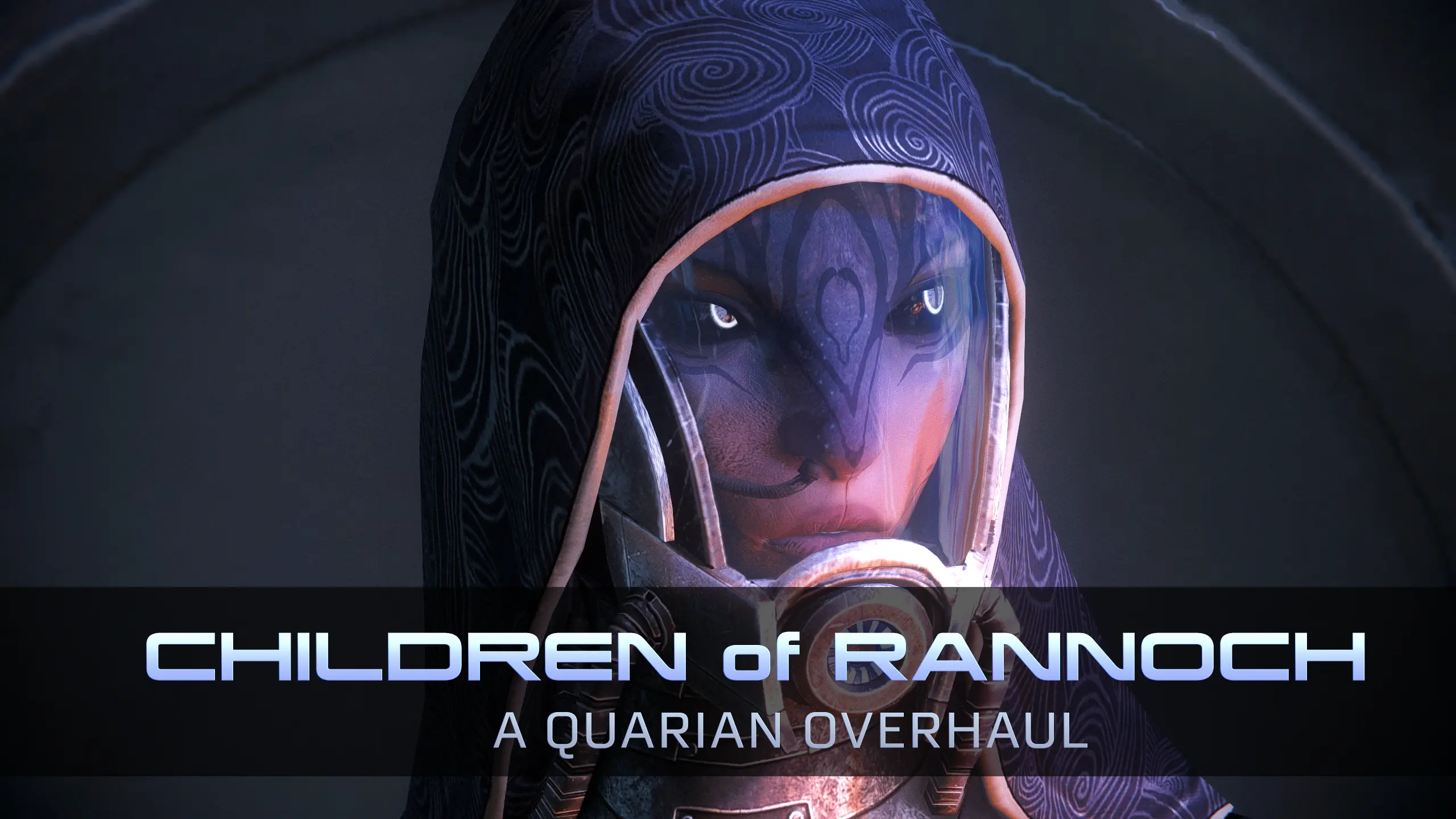


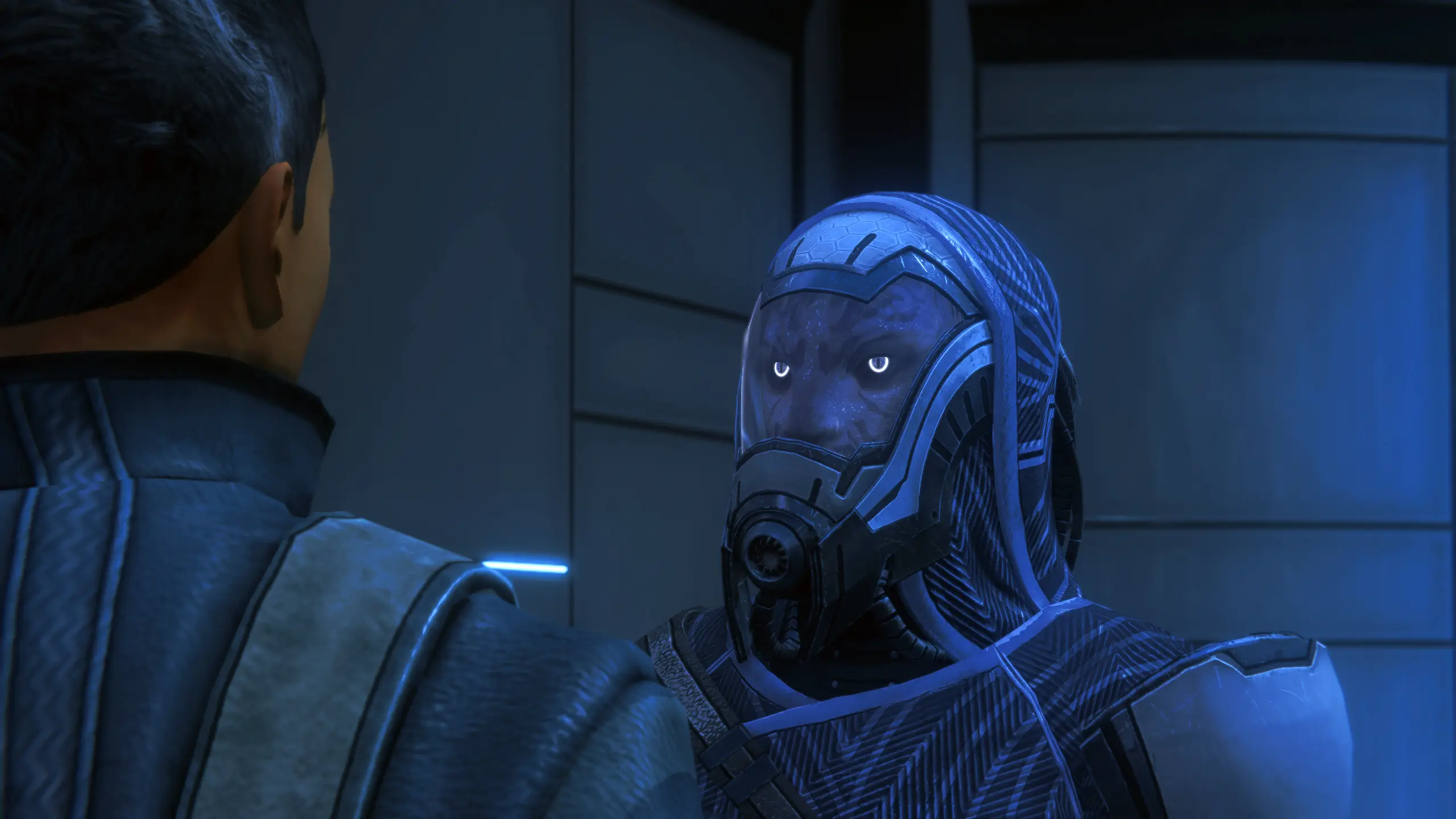
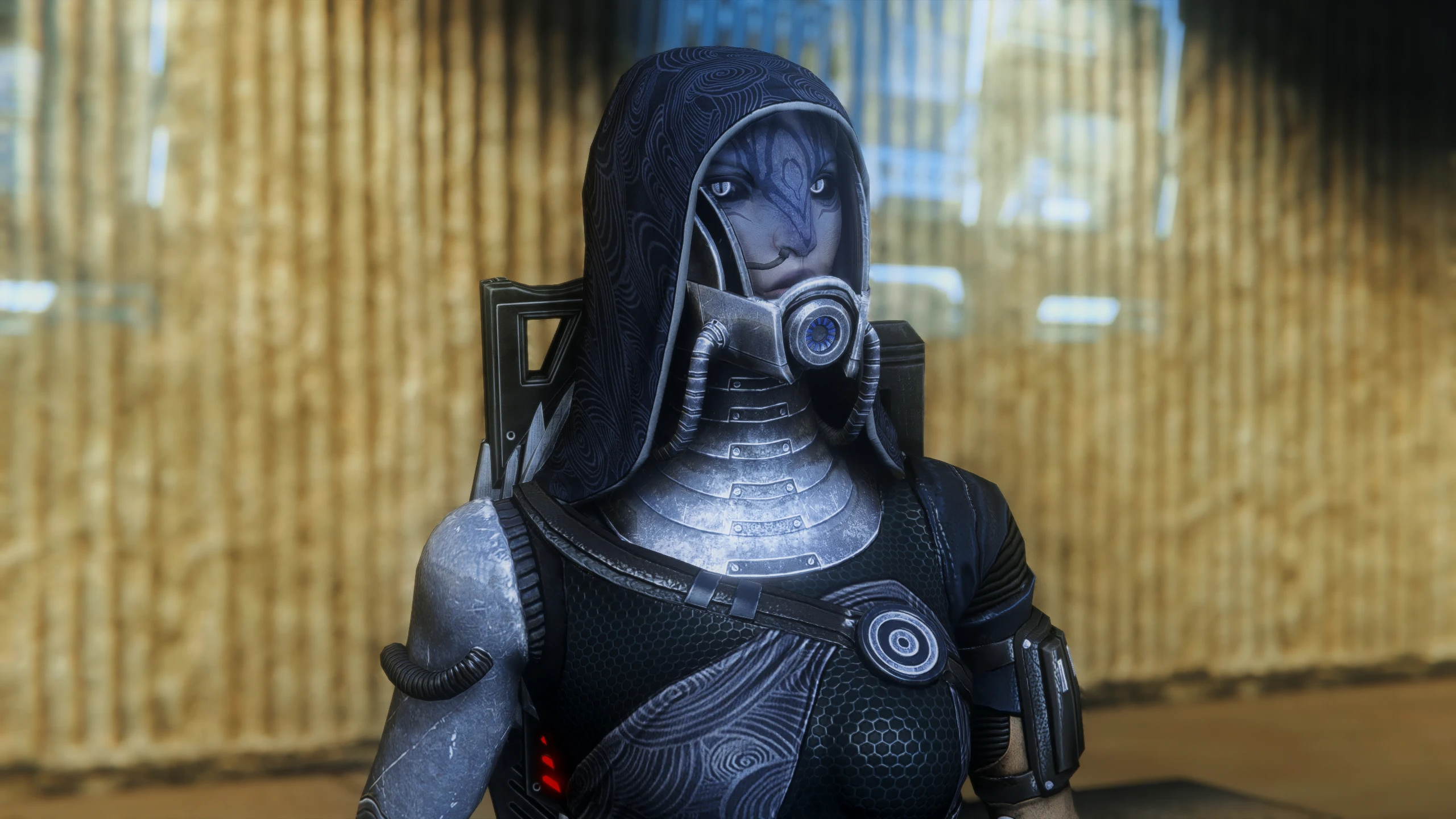


https://www.nexusmods.com/masseffectleg ... /mods/1812
"Drive me closer! I want to hit them with my sword!"
Re: Bioware General (Mass Effect/Dragon Age/Other)
https://www.nexusmods.com/masseffectleg ... /mods/1731
https://www.youtube.com/watch?v=VdRjseY-70s
https://www.youtube.com/watch?v=DXeni7htE58
[[ "For the first time, the game's combat and exploration have been combined into a seamless first-person experience! Caution, cognitohazard: May cause false memories of a world where Mass Effect was never a third-person shooter. Handle with care.
Details:
- Cover and visibility are now an important part of gameplay, as all combat cameras have been adjusted for the new perspective. This includes multiple depths of corner peeking/shooting and a dynamic lean feature.
- Movement in exploration mode has been modified to feel more responsive, and coming to a stop is smooth, without that pesky extra step. The turn speed of sprinting has been increased, and sprinting does not change the FOV -- sprinting in combat instead uses a (very slight) camera wobble to achieve the necessary effect.
- Elevator rides are in first-person, as well as crouching in exploration mode.
- Conversations are as normal.
- Shepard's hands and gun will not appear when in first-person perspective. This tradeoff is the foundation of the mod, so it will not be changed. Correction: On-screen gun and arms may be coming in a limited capacity, though to what extent I do not know. See here.
If for some reason you're only interested in one of the first-person modes, you can select which on install.
ME2 and ME3 versions are coming soon.
Strongly recommended mods for the best FPS experience:
No Mouse Acceleration for ME1 LE
No ESP (LE1)
Omni-Key Separator
This or your preferred unlimited sprint mod
Also consider:
Deadly Combat
LE1 Transparent Lens Flares
Elements of Comparative Weaponry
Known issues:
- When transitioning from a conversation back to the game, you might not be facing the person you were talking to.
- The camera interacts poorly with certain cover geometry if you find the right camera position.
- Bullets currently emit from where Shepard would be in third-person, which is less than ideal and kind of blinding." ]]
https://www.youtube.com/watch?v=VdRjseY-70s
https://www.youtube.com/watch?v=DXeni7htE58
[[ "For the first time, the game's combat and exploration have been combined into a seamless first-person experience! Caution, cognitohazard: May cause false memories of a world where Mass Effect was never a third-person shooter. Handle with care.
Details:
- Cover and visibility are now an important part of gameplay, as all combat cameras have been adjusted for the new perspective. This includes multiple depths of corner peeking/shooting and a dynamic lean feature.
- Movement in exploration mode has been modified to feel more responsive, and coming to a stop is smooth, without that pesky extra step. The turn speed of sprinting has been increased, and sprinting does not change the FOV -- sprinting in combat instead uses a (very slight) camera wobble to achieve the necessary effect.
- Elevator rides are in first-person, as well as crouching in exploration mode.
- Conversations are as normal.
- Shepard's hands and gun will not appear when in first-person perspective. This tradeoff is the foundation of the mod, so it will not be changed. Correction: On-screen gun and arms may be coming in a limited capacity, though to what extent I do not know. See here.
If for some reason you're only interested in one of the first-person modes, you can select which on install.
ME2 and ME3 versions are coming soon.
Strongly recommended mods for the best FPS experience:
No Mouse Acceleration for ME1 LE
No ESP (LE1)
Omni-Key Separator
This or your preferred unlimited sprint mod
Also consider:
Deadly Combat
LE1 Transparent Lens Flares
Elements of Comparative Weaponry
Known issues:
- When transitioning from a conversation back to the game, you might not be facing the person you were talking to.
- The camera interacts poorly with certain cover geometry if you find the right camera position.
- Bullets currently emit from where Shepard would be in third-person, which is less than ideal and kind of blinding." ]]
"Drive me closer! I want to hit them with my sword!"
Re: Bioware General (Mass Effect/Dragon Age/Other)
https://twitter.com/davidgaider/status/ ... 0091149313
[[ “One narrative design issue I’ve run into is what I call the "lyrium problem” (for obvious reasons). If you have something in your setting which can technically do anything (“magic” often qualifies, also eezo in ME) then it will, eventually, do *everything*. And that’s not good.
Why is it not good? Because it becomes this shiny, easy solution for every issue that prevents the team from doing the work to do anything *else*. Weird thing happens? Lyrium. Need a mechanic for a cool gameplay thing? Lyrium. Something that breaks all existing rules? Lyrium.
You can try to put limitations on your Anything Thing, but for many members of your team it’s SITTING RIGHT THERE. It’s the equivalent of narrative jazz hands… why do we need to restrict ourselves to a stupid box when anything is *technically* possible, right?
“The multiverse” is another current example. It can do anything. We can tell any story. We can resurrect characters, break every existing rule of the universe… and what other explanation do we need? Multiverse. Easy peasy.
Thing is, eventually you turn around and that Anything Thing has turned into narrative crack filler. It’s lost all meaning on its own. So be careful if you use it. It needs strict, clearly-communicated limitations established from the outset or it will grow like a weed.
Since it’s come up in the replies, I should mention that this issue doesn’t automatically render settings with an Anything Thing bad or unenjoyable. People like magic. It’s fine… for a time. The problem is with long-term narrative cohesion.
Eventually, once your Anything Thing becomes the answer to everything, suddenly it’s a task to explain why it *isn’t* the current answer. You have “It’s Not Lyrium This Time I Swear” and it’s cousin “No Lyrium Is Not the Solution” to contend with if you try to do anything *else*.
“No, we can’t go to the multiverse to bring this character back because… uh, reasons.” “No, magic won’t help you solve this riddle because… uh, reasons.” “No, the holodeck won’t give you the answer this time, even though it did last time, for… uh, reasons.”
I don’t claim to be better. I created the “lyrium problem” for myself in Dragon Age, as I was the Lead Narrative Designer. I agreed to everything each step along the way. It was a trap I fell into by inches, mainly because convenience was the Order of the Day.
All I’m saying is that, if you want to save yourself long-term headache, you need to put in the work on cohesion early… assuming you have the support of the rest of your team. Sometimes they don’t want to be bothered by your narrative nonsense, and who can blame them?“
////
User: “Do "lyrium ghosts” qualify as such?“
DG: "Indeed. I started out the setting saying there should be no proof of an afterlife. But then we need ghosts (apparently), so if they weren’t *really* ghosts then… lyrium? Because lyrium!”
User: “Great advice aside, I’m immediately adopting the term “narrative jazz hands” into my lexicon.”
DG: “It’s probably unfair for me to reference it in a negative since, considering "narrative jazz hands” was my go to response anytime we’d written ourselves into a corner that was too costly to get out of.“
User: "the more constraints you can put on your magic the better. you need solid uncrossable lines with what it can do, what it can’t, and what it won’t”
DG: “Magic is especially egregious, as many team members can bring existing ideas and assumptions about "magic” from other settings… so you need to be extra clear right from the start about what it can and can’t do. Even then, you’ll have problems. Because magic!“
DG: "I should mention that just because an Anything Thing exists and might be a problem for the long-term narrative cohesion, that doesn’t render everything automatically un-enjoyable for the audience. People like multiverses. People like magic.”
DG: “Magic and, to a larger extent, fantasy itself, can be a real issue when team members bring elements that are actually from other settings into the current one… not on purpose, but simply because it’s so omnipresent. You have to try really hard if you want to set boundaries.”
User: “There’s the opposite of this though: our Warden and our companions can take Lyrium and have no after effects whatsoever - most likely due to programming limitations.”
DG: “That’s easy to explain, actually. Me: *explaining all the narrative things involved with lyrium use in the lore* The Rest of the Team: Or not.”
User: “At least they did cover lyrium addiction with Cullen later on. It would have been a fun mechanic though if it had been implemented.”
DG: “Yeah, I agree. I remember once presenting how we could do a lyrium addiction mechanic in game terms, and it was cool… but ultimately seemed like a system the player would find annoying/limiting with no real upside. So it was on us writers to paste over that with words.”
User: “As you said in any old post on the BioWare forums, you’re meant to get dimishing returns from lyrium the more it’s taken. So the more your mage chugs down, the less effective it’ll eventually be, due to dependency. With addiction added on top, that actually would have been fun.”
DG: “Honestly, if I could go back now, I would have worked with the other designers to see what they could do and were willing to do before I tried to make an end run to create lore that would force them to do something they couldn’t or weren’t. Lesson learned!”
User: “[scrolling through this thread] …What?”
DG: “Look, when you gently try to explain to a stressed-out team member why the Cool Thing they just made doesn’t actually comply with the lore as-established, and it needs to be redone even though there is No Time, sometimes you gotta accept "just fuck OFF” as the final answer.“
User: "not including lyrium addiction could be considered as a plot contrivance. It’s the opposite of the usual Macguffin issue, inasmuch as something is supposed to do something but isn’t shown doing that said thing. In Meredith’s case, it was.”
DG: “Much the same as mages struggling with demonic possession vis a vis the lore, but it’s not something the player contends with. Less plot contrivance and more gameplay convenience, honestly, except whenever we try to explain away the difference.”
DG: “Me: "I hate time travel stories. They never work! They’re the worst!” Also Me: “So there’s this plot in Inquisition where you travel to the future, right? Because it’s cool.”“
User: "“I hate everything about this trope so I’m going to write it differently, but still earnestly” mixes well with people who have read their beloved trope a hundred times and are ready for something novel.”
DG: “And then you fall into exactly the same traps as everyone else did.”
User: “that quest [time travel quest in DA:I] was so good, I barely knew them but seeing them suffering and choosing to give me all the time they can is so heart wrenching. and then you come back and they have no idea you are now terrified of losing them. genius”
DG: “In retrospect, I felt bad we didn’t make it crit path, as it did the best job of demonstrating to the player why Corypheus winning was Definitely a Bad Thing.”
User: “‘How do we account for a player having killed Leliana in DAO if she’s a critical character for DAI? Lyrium.’”
DG: “That was SO Mike Laidlaw’s fault, but yes… one more inch into the pit” ]]
[[ “One narrative design issue I’ve run into is what I call the "lyrium problem” (for obvious reasons). If you have something in your setting which can technically do anything (“magic” often qualifies, also eezo in ME) then it will, eventually, do *everything*. And that’s not good.
Why is it not good? Because it becomes this shiny, easy solution for every issue that prevents the team from doing the work to do anything *else*. Weird thing happens? Lyrium. Need a mechanic for a cool gameplay thing? Lyrium. Something that breaks all existing rules? Lyrium.
You can try to put limitations on your Anything Thing, but for many members of your team it’s SITTING RIGHT THERE. It’s the equivalent of narrative jazz hands… why do we need to restrict ourselves to a stupid box when anything is *technically* possible, right?
“The multiverse” is another current example. It can do anything. We can tell any story. We can resurrect characters, break every existing rule of the universe… and what other explanation do we need? Multiverse. Easy peasy.
Thing is, eventually you turn around and that Anything Thing has turned into narrative crack filler. It’s lost all meaning on its own. So be careful if you use it. It needs strict, clearly-communicated limitations established from the outset or it will grow like a weed.
Since it’s come up in the replies, I should mention that this issue doesn’t automatically render settings with an Anything Thing bad or unenjoyable. People like magic. It’s fine… for a time. The problem is with long-term narrative cohesion.
Eventually, once your Anything Thing becomes the answer to everything, suddenly it’s a task to explain why it *isn’t* the current answer. You have “It’s Not Lyrium This Time I Swear” and it’s cousin “No Lyrium Is Not the Solution” to contend with if you try to do anything *else*.
“No, we can’t go to the multiverse to bring this character back because… uh, reasons.” “No, magic won’t help you solve this riddle because… uh, reasons.” “No, the holodeck won’t give you the answer this time, even though it did last time, for… uh, reasons.”
I don’t claim to be better. I created the “lyrium problem” for myself in Dragon Age, as I was the Lead Narrative Designer. I agreed to everything each step along the way. It was a trap I fell into by inches, mainly because convenience was the Order of the Day.
All I’m saying is that, if you want to save yourself long-term headache, you need to put in the work on cohesion early… assuming you have the support of the rest of your team. Sometimes they don’t want to be bothered by your narrative nonsense, and who can blame them?“
////
User: “Do "lyrium ghosts” qualify as such?“
DG: "Indeed. I started out the setting saying there should be no proof of an afterlife. But then we need ghosts (apparently), so if they weren’t *really* ghosts then… lyrium? Because lyrium!”
User: “Great advice aside, I’m immediately adopting the term “narrative jazz hands” into my lexicon.”
DG: “It’s probably unfair for me to reference it in a negative since, considering "narrative jazz hands” was my go to response anytime we’d written ourselves into a corner that was too costly to get out of.“
User: "the more constraints you can put on your magic the better. you need solid uncrossable lines with what it can do, what it can’t, and what it won’t”
DG: “Magic is especially egregious, as many team members can bring existing ideas and assumptions about "magic” from other settings… so you need to be extra clear right from the start about what it can and can’t do. Even then, you’ll have problems. Because magic!“
DG: "I should mention that just because an Anything Thing exists and might be a problem for the long-term narrative cohesion, that doesn’t render everything automatically un-enjoyable for the audience. People like multiverses. People like magic.”
DG: “Magic and, to a larger extent, fantasy itself, can be a real issue when team members bring elements that are actually from other settings into the current one… not on purpose, but simply because it’s so omnipresent. You have to try really hard if you want to set boundaries.”
User: “There’s the opposite of this though: our Warden and our companions can take Lyrium and have no after effects whatsoever - most likely due to programming limitations.”
DG: “That’s easy to explain, actually. Me: *explaining all the narrative things involved with lyrium use in the lore* The Rest of the Team: Or not.”
User: “At least they did cover lyrium addiction with Cullen later on. It would have been a fun mechanic though if it had been implemented.”
DG: “Yeah, I agree. I remember once presenting how we could do a lyrium addiction mechanic in game terms, and it was cool… but ultimately seemed like a system the player would find annoying/limiting with no real upside. So it was on us writers to paste over that with words.”
User: “As you said in any old post on the BioWare forums, you’re meant to get dimishing returns from lyrium the more it’s taken. So the more your mage chugs down, the less effective it’ll eventually be, due to dependency. With addiction added on top, that actually would have been fun.”
DG: “Honestly, if I could go back now, I would have worked with the other designers to see what they could do and were willing to do before I tried to make an end run to create lore that would force them to do something they couldn’t or weren’t. Lesson learned!”
User: “[scrolling through this thread] …What?”
DG: “Look, when you gently try to explain to a stressed-out team member why the Cool Thing they just made doesn’t actually comply with the lore as-established, and it needs to be redone even though there is No Time, sometimes you gotta accept "just fuck OFF” as the final answer.“
User: "not including lyrium addiction could be considered as a plot contrivance. It’s the opposite of the usual Macguffin issue, inasmuch as something is supposed to do something but isn’t shown doing that said thing. In Meredith’s case, it was.”
DG: “Much the same as mages struggling with demonic possession vis a vis the lore, but it’s not something the player contends with. Less plot contrivance and more gameplay convenience, honestly, except whenever we try to explain away the difference.”
DG: “Me: "I hate time travel stories. They never work! They’re the worst!” Also Me: “So there’s this plot in Inquisition where you travel to the future, right? Because it’s cool.”“
User: "“I hate everything about this trope so I’m going to write it differently, but still earnestly” mixes well with people who have read their beloved trope a hundred times and are ready for something novel.”
DG: “And then you fall into exactly the same traps as everyone else did.”
User: “that quest [time travel quest in DA:I] was so good, I barely knew them but seeing them suffering and choosing to give me all the time they can is so heart wrenching. and then you come back and they have no idea you are now terrified of losing them. genius”
DG: “In retrospect, I felt bad we didn’t make it crit path, as it did the best job of demonstrating to the player why Corypheus winning was Definitely a Bad Thing.”
User: “‘How do we account for a player having killed Leliana in DAO if she’s a critical character for DAI? Lyrium.’”
DG: “That was SO Mike Laidlaw’s fault, but yes… one more inch into the pit” ]]
"Drive me closer! I want to hit them with my sword!"
Re: Bioware General (Mass Effect/Dragon Age/Other)
Gaider ain't wrong about that. Both when thinking about Mass Effect and when writing fan fiction, I've thought about eezo as the "not-magic magic" introduces so many angles of issue. Thankfully it's a fairly heavily restricted concept, outside asari, but even then.
Though I'd say the greater issue is that writers don't think things through. Your magic, or power Macguffin, isn't necessarily ever a problem _if_ you put some effort into projecting its impact on the game and setting. As is mentioned, they did not have the time for that (despite a super-long dev time for DA:O *coughcough*). Hell, could even go old school, and make it so nobody has any idea why or how any of this stuff works, just that the people who do are rare, recluses, and super weird. Wizard can't explain why he can chuck fireballs, why saying the spell makes it pop up, or what he actually does in his tower, but you're happy to have him along anyway.
Though I'd say the greater issue is that writers don't think things through. Your magic, or power Macguffin, isn't necessarily ever a problem _if_ you put some effort into projecting its impact on the game and setting. As is mentioned, they did not have the time for that (despite a super-long dev time for DA:O *coughcough*). Hell, could even go old school, and make it so nobody has any idea why or how any of this stuff works, just that the people who do are rare, recluses, and super weird. Wizard can't explain why he can chuck fireballs, why saying the spell makes it pop up, or what he actually does in his tower, but you're happy to have him along anyway.
Re: Bioware General (Mass Effect/Dragon Age/Other)
As for the Leliana thing... well, them's the breaks if you want to give your players the maximum of choices. I think at least Mass Effect did it pretty well from ME2 (where you can kill most of your team) to ME3, where the dead people then are replaced if necessary by other characters... who can change the potential ending radically if you let them, i.e. Wrex and Wreav.
Re: Bioware General (Mass Effect/Dragon Age/Other)
Yeah, Wrex and Wreav are the gold standards for that kind of plot carry-over. Pick a very meaningful choice, given it due justice as it ripples out over time, but keep it localized to where it matters so you don't have to spend a bajillion dollars trying to handle exponentially complicated mutation states. As I recall, you can't even get a good ending with Wreav, only Wrex, and you can get Mordin to agree to sabotage the genophage cure _and_ escape with you in one of Wreav's.
Re: Bioware General (Mass Effect/Dragon Age/Other)
"EA Sports and EA Games Splitting Apart in Internal Shakeup; EA is undergoing a major internal reorganization, with EA Games being renamed "EA Entertainment"
https://www.gamespot.com/articles/elect ... 0-6515348/
https://www.eurogamer.net/ea-games-beco ... tructuring
https://www.rockpapershotgun.com/ea-gam ... -ea-sports
"EA Sports will handle the portfolio of sports properties that EA owns. Cam Weber has been appointed its president and will overlook franchises such as Madden, PGA Tour, NHL, and EA Sports FC (formerly FIFA). EA Entertainment will oversee the non-sports games within Electronic Arts and includes studios like Respawn, DICE, Ripple Effect, Ridgeline Games, BioWare, and EA Originals label."
https://www.gamespot.com/articles/elect ... 0-6515348/
https://www.eurogamer.net/ea-games-beco ... tructuring
https://www.rockpapershotgun.com/ea-gam ... -ea-sports
"EA Sports will handle the portfolio of sports properties that EA owns. Cam Weber has been appointed its president and will overlook franchises such as Madden, PGA Tour, NHL, and EA Sports FC (formerly FIFA). EA Entertainment will oversee the non-sports games within Electronic Arts and includes studios like Respawn, DICE, Ripple Effect, Ridgeline Games, BioWare, and EA Originals label."
"Drive me closer! I want to hit them with my sword!"
Re: Bioware General (Mass Effect/Dragon Age/Other)
https://www.nexusmods.com/masseffectleg ... /mods/1782
https://www.nexusmods.com/masseffectleg ... /mods/1823


https://www.nexusmods.com/masseffectleg ... /mods/1823
"Drive me closer! I want to hit them with my sword!"
Re: Bioware General (Mass Effect/Dragon Age/Other)


"Drive me closer! I want to hit them with my sword!"
Re: Bioware General (Mass Effect/Dragon Age/Other)
https://gamerant.com/star-wars-swtor-ma ... id-hayter/
"Jennifer Hale and David Hayter chat with Game Rant about how they approached voice roles in games like Mass Effect and Star Wars: The Old Republic.
In anticipation of the PSVR2 exclusive Synapse, Game Rant spoke with actors Jennifer Hale and David Hayter, who both play roles in the upcoming title. They spent some time during the interview discussing how they approached voicing characters in games that feature branching dialogue trees with morality systems. Jennifer Hale memorably portrayed the female Commander Shepard in Mass Effect as well as the female Trooper in Star Wars: The Old Republic, whereas David Hayter brought life to the male Jedi Knight in Star Wars: The Old Republic.
Jennifer Hale Sees Mass Effect’s Paragon And Renegade Shepard As The Same Person
Mass Effect is one of the most well-regarded RPGs in recent memory largely due to its dialogue and morality system that allows players to express themselves in a way that is impactful to both the story and Commander Shepard’s interpersonal relationships. Dialogue choices are often split between the heroic and virtuous Paragon and the sardonic, occasionally ruthless Renegade. Jennifer Hale spoke about how she appreciates the character’s ability to shift between these attitudes in a relatable way.
“To everyone, I say “Look in the mirror.” Sometimes you get out of bed, and you’re in a great mood. Other days, you get out of bed and you’re like “Don’t talk to me for a couple hours, leave me alone,” but you’re still the same person. You can get out of bed as one person and something can happen, and in a nanosecond, you’re the other person.
And so playing a character like that – It’s the same character. They’re just hopping from mood to mood and circumstance to circumstance. The throughline is there and it’s very definite. You’re not a wholly different character from line to line, it’s just a different moment, and how you respond to it is with maybe tighter governors or looser governors.”
Hale’s approach to Shepard’s role is so successful because the “good” and “bad” options don’t feel like completely different characters. One of the most highly recommended ways to play through the Mass Effect trilogy is by taking a “Paragade” approach in which players go for a mix of both, because Shepard, like any person, might not always be feeling optimistic or cynical. A predominantly Renegade Shepard may still choose to hug and comfort Tali during an emotional moment (a Paragon choice) and it doesn’t at all feel inconsistent.
David Hayter Views Star Wars: The Old Republic’s Dialogue Choices As Different Journeys
In Star Wars: The Old Republic, the moral extremes are somewhat more pronounced in the dialogue choices as players lean toward either the Light Side or the Dark Side of the Force. Even the Jedi Knight can be outright evil if the player chooses, which leads David Hayter to view these paths as essentially different journeys to take for the character.
I almost use the same voice for all of them, but I kind of feel like they’re different personalities. One of them is kind of a Han Solo, while the Light Side responses are heroic, but kind of bland – he’ll never deviate from “May the Force be with You,” that sort of thing. The cynical guy is just like, “What is wrong with you?” which is so much more fun. The moments where I’m full-on Dark Side and I’m like, “I am going to destroy you!” is arguably more fun to do.
I try to deliver it all through the same guy’s vocal cords, but they are different. They’re having different journeys, and some of them are more funny and exasperating than others.
Naturally, Hayter found that it was more fun to embrace the Dark Side while acting, if only because the Light-Sided Jedi Knight is a tad bland due to the Jedi Order’s insistence on emotional detachment. Either way, the presence of branching dialogue enables players to embark on the journey of their choice and explore the full range of David Hayter and Jennifer Hale’s exceptional acting abilities upon repeat playthroughs."
"Jennifer Hale and David Hayter chat with Game Rant about how they approached voice roles in games like Mass Effect and Star Wars: The Old Republic.
In anticipation of the PSVR2 exclusive Synapse, Game Rant spoke with actors Jennifer Hale and David Hayter, who both play roles in the upcoming title. They spent some time during the interview discussing how they approached voicing characters in games that feature branching dialogue trees with morality systems. Jennifer Hale memorably portrayed the female Commander Shepard in Mass Effect as well as the female Trooper in Star Wars: The Old Republic, whereas David Hayter brought life to the male Jedi Knight in Star Wars: The Old Republic.
Jennifer Hale Sees Mass Effect’s Paragon And Renegade Shepard As The Same Person
Mass Effect is one of the most well-regarded RPGs in recent memory largely due to its dialogue and morality system that allows players to express themselves in a way that is impactful to both the story and Commander Shepard’s interpersonal relationships. Dialogue choices are often split between the heroic and virtuous Paragon and the sardonic, occasionally ruthless Renegade. Jennifer Hale spoke about how she appreciates the character’s ability to shift between these attitudes in a relatable way.
“To everyone, I say “Look in the mirror.” Sometimes you get out of bed, and you’re in a great mood. Other days, you get out of bed and you’re like “Don’t talk to me for a couple hours, leave me alone,” but you’re still the same person. You can get out of bed as one person and something can happen, and in a nanosecond, you’re the other person.
And so playing a character like that – It’s the same character. They’re just hopping from mood to mood and circumstance to circumstance. The throughline is there and it’s very definite. You’re not a wholly different character from line to line, it’s just a different moment, and how you respond to it is with maybe tighter governors or looser governors.”
Hale’s approach to Shepard’s role is so successful because the “good” and “bad” options don’t feel like completely different characters. One of the most highly recommended ways to play through the Mass Effect trilogy is by taking a “Paragade” approach in which players go for a mix of both, because Shepard, like any person, might not always be feeling optimistic or cynical. A predominantly Renegade Shepard may still choose to hug and comfort Tali during an emotional moment (a Paragon choice) and it doesn’t at all feel inconsistent.
David Hayter Views Star Wars: The Old Republic’s Dialogue Choices As Different Journeys
In Star Wars: The Old Republic, the moral extremes are somewhat more pronounced in the dialogue choices as players lean toward either the Light Side or the Dark Side of the Force. Even the Jedi Knight can be outright evil if the player chooses, which leads David Hayter to view these paths as essentially different journeys to take for the character.
I almost use the same voice for all of them, but I kind of feel like they’re different personalities. One of them is kind of a Han Solo, while the Light Side responses are heroic, but kind of bland – he’ll never deviate from “May the Force be with You,” that sort of thing. The cynical guy is just like, “What is wrong with you?” which is so much more fun. The moments where I’m full-on Dark Side and I’m like, “I am going to destroy you!” is arguably more fun to do.
I try to deliver it all through the same guy’s vocal cords, but they are different. They’re having different journeys, and some of them are more funny and exasperating than others.
Naturally, Hayter found that it was more fun to embrace the Dark Side while acting, if only because the Light-Sided Jedi Knight is a tad bland due to the Jedi Order’s insistence on emotional detachment. Either way, the presence of branching dialogue enables players to embark on the journey of their choice and explore the full range of David Hayter and Jennifer Hale’s exceptional acting abilities upon repeat playthroughs."
"Drive me closer! I want to hit them with my sword!"
Who is online
Users browsing this forum: No registered users and 54 guests